
Best Chronic Care Management Software of 2026: An AI-Governed Comparison

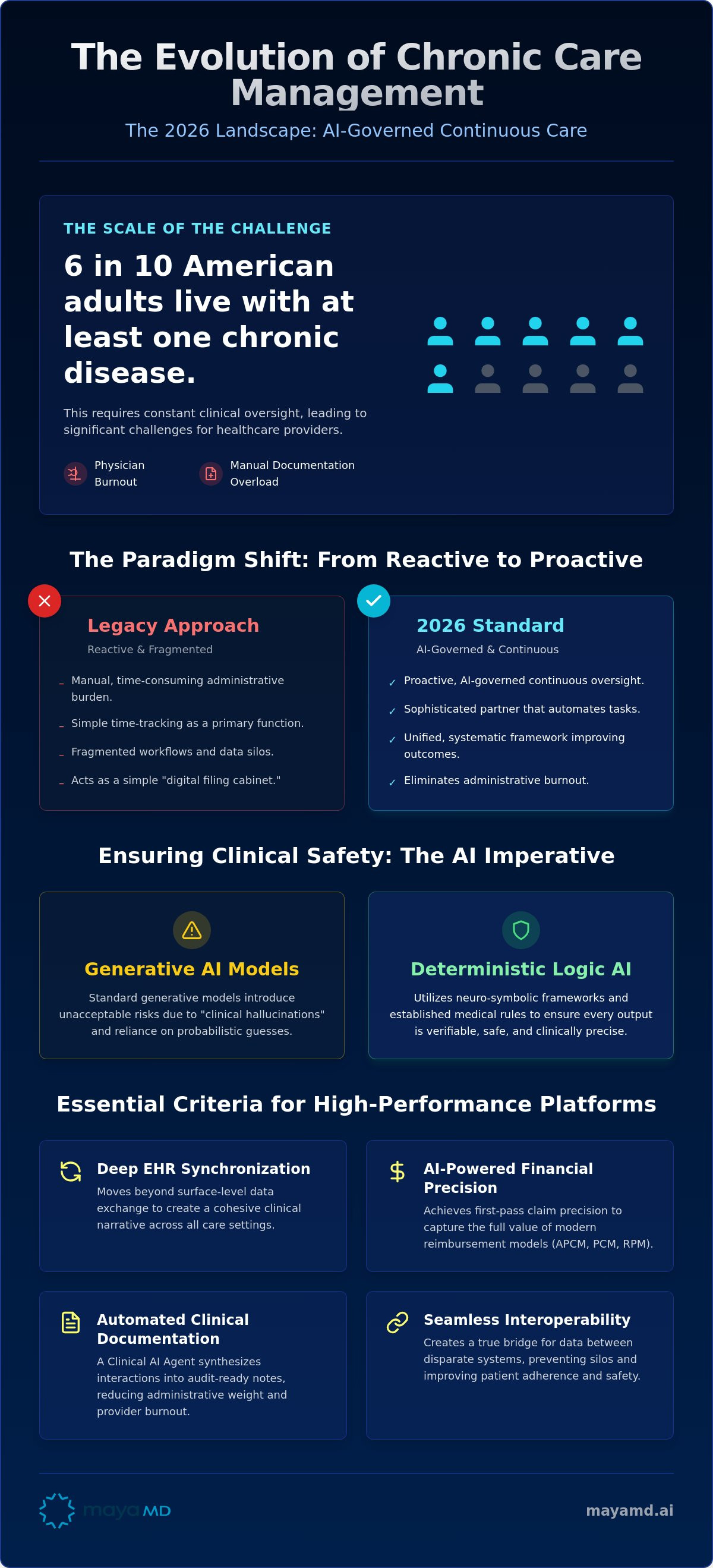
The best chronic care management software in 2026 is no longer defined by simple time-tracking. It's defined by the ability to provide AI-governed continuous care without the risk of clinical hallucinations. You've likely felt the mounting pressure of manual documentation and the valid skepticism surrounding the safety of generative AI in a high-stakes clinical environment. It's a difficult balance to maintain when six in ten American adults live with at least one chronic disease, requiring constant oversight that often leads to physician exhaustion.
You deserve a system that acts as a sophisticated partner rather than just a digital filing cabinet. This comparison details how the next generation of AI-driven CCM software is eliminating administrative burnout and improving clinical outcomes through deterministic logic. We provide a rigorous analysis of platforms that prioritize safety and precision, ensuring your documentation is audit-ready and your patient engagement remains high. We'll examine how these tools integrate seamlessly across care settings to deliver measurable improvements in patient adherence and provider satisfaction.
Key Takeaways
• Analyze the fundamental shift from reactive time-tracking to the proactive, AI-governed continuous care models that define the 2026 clinical landscape.
• Understand the critical role of deterministic logic in eliminating clinical hallucinations, ensuring safety and precision in automated patient engagement.
• Discover how to identify the best chronic care management software by prioritizing deep EHR synchronization and seamless interoperability.
• Explore how a Clinical AI Agent serves as a sophisticated partner to automate clinical documentation and significantly reduce physician burnout.
Evaluating the 2026 Chronic Care Management Software Landscape
The definition of Chronic Care Management has shifted from a manual administrative burden to a sophisticated exercise in digital oversight. In 2026, the best chronic care management software is distinguished by its transition from reactive time-tracking to proactive, AI-governed continuous care. This evolution replaces the fragmented workflows of the past with a unified, systematic framework. It's a high-stakes environment where precision isn't optional. Governed AI has emerged as the new benchmark for clinical reliability, providing a level of rigorous oversight that manual processes simply can't match.
Deterministic Logic vs. Generative AI in Clinical Settings
Standard generative models often struggle with clinical "hallucinations," which present unacceptable risks in chronic disease management. Deterministic logic serves as the essential corrective. By utilizing neuro-symbolic frameworks, the best chronic care management software ensures that every output is derived from established medical rules rather than probabilistic guesses. This hybrid approach provides the empathetic interface of AI with the cold, hard logic of data science. It's a safer, more reliable way to manage complex patient populations without compromising safety or accuracy.
The 2026 Regulatory Environment: APCM and Beyond
Regulatory standards in 2026 now emphasize Advanced Primary Care Management (APCM) over traditional, siloed billing codes. Modern platforms must seamlessly integrate PCM and RPM into a single clinical workflow to capture these new reimbursement opportunities. This connectivity ensures that documentation is audit-ready and compliant with increasing OIG scrutiny. A software's ability to map technical features to these specific regulatory outcomes is what defines its value to a modern practice. It's about moving past the experimental phase into proven, compliant application that supports both the provider and the patient.
For patients to fully benefit from these sophisticated care models, having the right coverage is essential. An independent medicare agent near me can provide the necessary guidance to help seniors navigate their options and select a plan that supports these advanced care management services.
In specialized medical fields, such as men's health, this commitment to proven application ensures that patients receive consistent, high-quality care; find out more about how these specialized practices are leading the way as examples of modern clinical excellence.
This focus on specialized clinical excellence is also evident in gender-specific care; for example, you can discover Women’s Mental Health Specialist to learn about virtual, hormone-informed care models designed specifically for women.
Essential Criteria for High-Performance CCM Platforms
Selecting the best chronic care management software requires a shift in perspective from administrative utility to clinical necessity. High-performance platforms in 2026 are evaluated by their ability to provide deep EHR synchronization rather than mere surface-level data exchange. This level of integration ensures that patient data flows seamlessly across care settings, transforming fragmented records into a cohesive clinical narrative. Financial performance is equally critical. Modern systems utilize AI to achieve first-pass claim precision, helping practices capture the full value of 2026 reimbursement models for non-complex CCM and Remote Physiological Monitoring codes. It's about ensuring every technical feature maps directly to a measurable clinical or financial outcome.
Automated Clinical Documentation and Physician Burnout
Clinicians in Phoenix and Indianapolis face mounting pressures that often lead to professional exhaustion. The transition to digital healthcare for chronic disease requires automated, audit-ready notes that reduce this administrative weight. A Clinical AI Agent goes beyond simple transcription by synthesizing patient interactions into structured data. This capability allows providers to focus on complex medical decision-making while the software handles the rigorous documentation standards required for compliance. It's a fundamental change that restores the patient-provider connection by removing the screen between them.
Interoperability and Data Connectivity
True clinical connectivity acts as a bridge between disparate data points. The best chronic care management software must facilitate a seamless flow of information between major medical centers in Chicago and local primary care clinics. This deep synchronization prevents data silos that often compromise care quality. When systems talk to each other through sophisticated integration frameworks, the result is a measurable improvement in patient adherence and safety. You can explore how clinical AI agents bridge these gaps effectively. By ensuring that every stakeholder has access to the same real-time data, the platform creates a more stable and reliable care ecosystem for the long term.
MayaMD: The Definitive Choice for AI-Governed Chronic Care
MayaMD stands as the sophisticated partner for organizations navigating the complexities of modern healthcare. By positioning itself as an authoritative pioneer, the platform provides a level of reliability that transcends basic managed service models. In hubs like Las Vegas and Houston, providers utilize this technology to bridge the gap between high patient volumes and clinical precision. The best chronic care management software doesn't just track time; it actively supports the clinician through a Clinical AI Agent that eliminates the risk of hallucinations. This deterministic approach ensures that every interaction is grounded in proven medical logic, directly addressing the primary driver of physician burnout: manual, repetitive documentation.
Advanced Primary Care Management (APCM) Integration
MayaMD facilitates the strategic integration of advanced primary care management to meet 2026 clinical standards. For clinicians in Indianapolis and Phoenix, this means a streamlined workflow where APCM and PCM are no longer siloed activities. The platform's ability to automate audit-ready notes allows specialized clinics to maintain high performance without increasing administrative staff. By synchronizing complex care plans with real-time data, MayaMD transforms the daily reality of patient management into a methodical, predictable process.
Future-Proofing Your Practice with Clinical AI
Long-term clinical success requires a roadmap for remote patient monitoring software that values depth over fleeting trends. MayaMD offers an all-encompassing ecosystem where RPM, PCM, and APCM function in harmony. This visionary approach ensures your practice is prepared for evolving regulatory scrutiny and shifting reimbursement models. Choosing the best chronic care management software is a high-stakes decision that impacts both the quality of care and the sustainability of your practice. By prioritizing a governed, logical framework, MayaMD provides the stability and security necessary for a lasting clinical partnership.
Advancing Toward a Governed Future in Chronic Care
The transition to a proactive, AI-driven model represents a fundamental shift in how we approach long-term patient health. Selecting the best chronic care management software requires a commitment to clinical safety that transcends basic automation. By utilizing neuro-symbolic AI and deterministic logic, providers can eliminate the risk of clinical hallucinations and ensure every patient interaction is grounded in proven medical frameworks. This structured approach is already transforming practices in Las Vegas, Indianapolis, and Houston, where clinicians are reclaiming their time from the burden of manual documentation. Beyond technological tools, you can discover Dr. Philip Boamah | Natural Medicine & Physical Therapy to explore how integrative medicine and physical therapy provide a complementary, human-centered approach to chronic health management.
A high-performance ecosystem depends on stable, HIPAA-compliant cloud architecture and deep EHR synchronization. These technical foundations allow for seamless interoperability across disparate care settings, ensuring that patient data remains a cohesive clinical narrative. It's time to move past experimental tools and adopt a proven platform that prioritizes precision and regulatory adherence. You can Request a Clinical AI Demo from MayaMD to see how we bridge the gap between advanced data science and the human quality of care. We look forward to partnering with you to achieve measurable clinical outcomes and a more sustainable future for your practice.
Frequently Asked Questions
What makes chronic care management software "best" for a practice in 2026?
The best chronic care management software in 2026 is defined by its ability to provide audit-ready, AI-governed continuous care. It moves beyond simple time-tracking. This software must utilize deterministic logic to ensure clinical precision and safety throughout the patient journey. It should also offer deep EHR synchronization to prevent data silos while supporting complex reimbursement models like APCM and PCM.
How does Clinical AI prevent hallucinations in medical documentation?
Clinical AI prevents hallucinations by integrating neuro-symbolic logic with standard generative models. This deterministic framework ensures precision. Every clinical note or patient interaction follows established medical rules and validated data points. By prioritizing systematic logic over probabilistic guessing, the system maintains high-stakes reliability. This approach transforms AI into a rigorous partner for clinical documentation and patient management.
Is MayaMD HIPAA-compliant for remote patient monitoring in Chicago and Houston?
Yes, MayaMD utilizes a cloud-based, HIPAA-compliant infrastructure designed for the best chronic care management software experience in Chicago and Houston. This architecture ensures that sensitive patient data remains protected. It relies on rigorous encryption and regulatory oversight. The platform's security framework supports long-term partnerships with providers by maintaining the highest standards of clinical validity and data privacy.
How does APCM software differ from traditional CCM platforms?
APCM software focuses on a proactive, unified care model that integrates Principal Care Management and Remote Patient Monitoring into a single clinical workflow. Traditional CCM platforms often rely on fragmented time-tracking. In contrast, 2026-era APCM tools prioritize continuous oversight and automated documentation. This shift allows practices to capture comprehensive reimbursement while significantly reducing physician burnout.



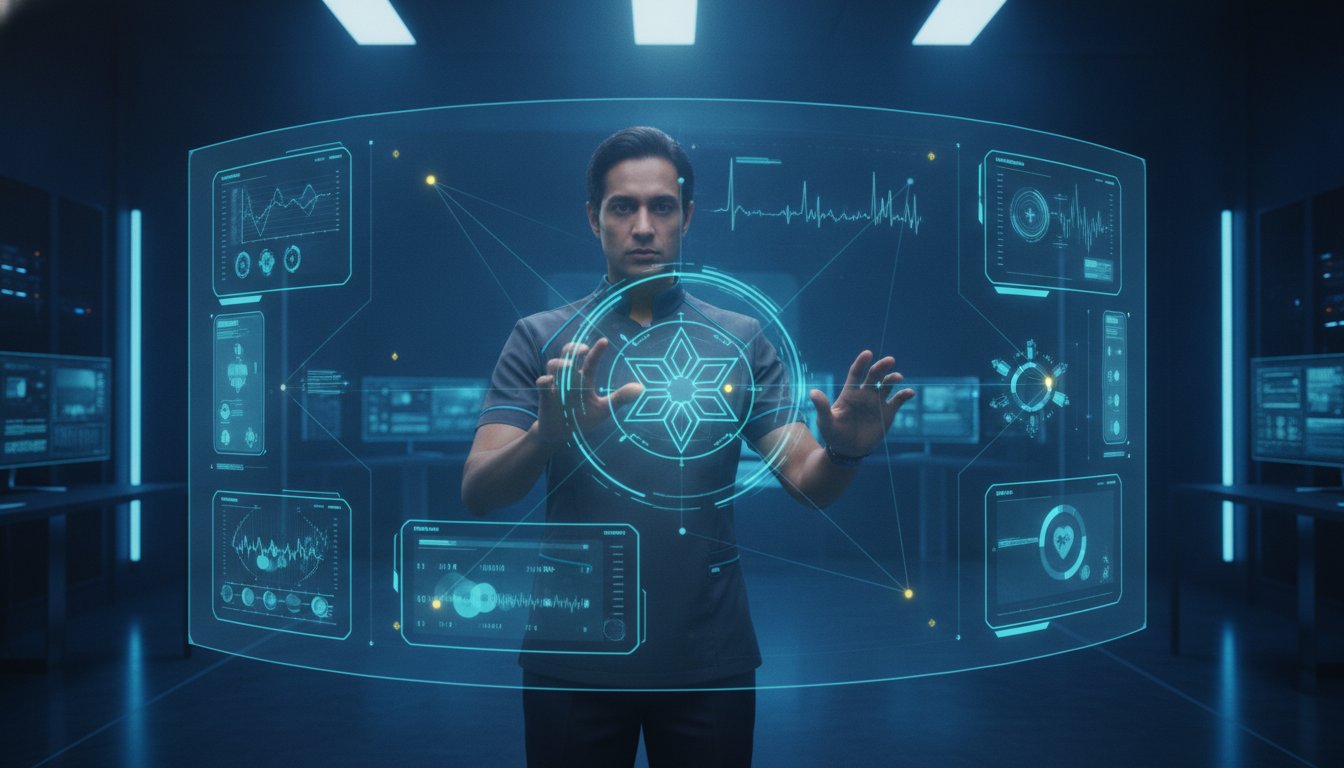
See The MayaMD Difference
Fill the form below
Download Our Apps
MayaMD for patients and MayaPro for physicians - available on iOS and Android.
FOR PATIENTS
MayaMD App
AI-powered symptom assessment, triage, and secure access to your care team.
FOR PHYSICIANS
MayaPro App
MayaPro brings patient vitals, RPM/PCM care plans, and clinical decision support to your pocket.