
Automated Clinical Documentation for Providers: Enhancing Precision in Chronic Care Management

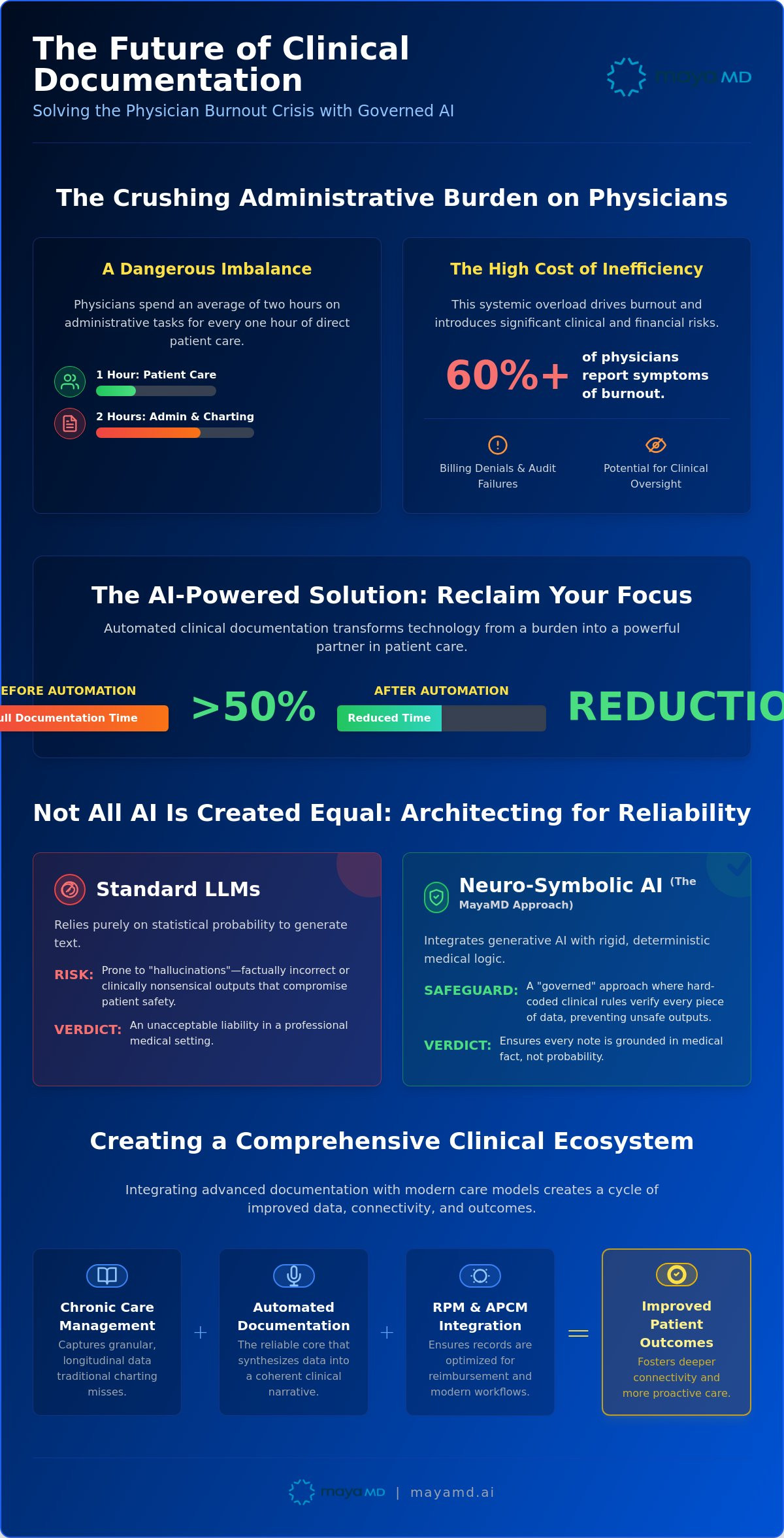
Physicians currently spend an average of two hours on administrative tasks for every one hour of patient care, a systematic inefficiency that has pushed over 60% of the workforce toward burnout. You're likely intimately familiar with the burden of "pajama time" charting and the persistent fear that a manual documentation error might lead to a billing denial or a clinical oversight. Implementing reliable automated clinical documentation for providers is no longer a speculative venture; it's a critical strategy for maintaining clinical authority in an increasingly complex regulatory environment.
We recognize that for many, the promise of artificial intelligence is clouded by the risk of "hallucinations" and the challenge of maintaining HIPAA compliance. This article details how advanced clinical AI utilizes deterministic logic to ensure that every note is grounded in medical fact rather than statistical probability. You'll discover how to reduce documentation time by 30-40% and achieve seamless integration within RPM and APCM workflows, ultimately transforming technology from an administrative hurdle into a sophisticated partner in patient care.
Key Takeaways
• Learn why chronic disease management requires granular data structures that traditional charting methods fail to capture effectively.
• Understand the mechanics of Neuro-Symbolic AI and how it enables reliable automated clinical documentation for providers by grounding generative outputs in deterministic clinical logic.
• Evaluate the transition from passive ambient transcription to governed AI agents that actively support HIPAA-compliant, cloud-based clinical workflows.
• Follow a strategic framework for assessing documentation bottlenecks and launching pilot programs for Clinical AI Agents in high-volume chronic care settings.
• Discover how integrating advanced documentation with RPM and APCM services creates a comprehensive ecosystem that fosters deeper connectivity and improved patient outcomes.
Table of Contents
•
The Administrative Burden: Why Traditional Documentation Fails Chronic Care
•
Architecting Reliability: How Neuro-Symbolic AI Automates Clinical Notes
•
Ambient Scribes vs. Governed AI: Choosing the Right Documentation Tool
•
Operationalizing Automated Documentation in Modern Clinical Workflows
•
MayaMD: Integrating Automated Documentation with Advanced Primary Care
The Administrative Burden: Why Traditional Documentation Fails Chronic Care
Chronic disease management presents a unique challenge that standard, episodic documentation cannot meet. While a typical acute visit might focus on a single symptom, chronic disease managment requires a granular, longitudinal view of a patient’s health, tracking subtle physiological shifts and medication adherence over months or years. In the 2026 healthcare environment, the focus has shifted from merely capturing data to generating actionable insights. This evolution demands automated clinical documentation for providers that does more than transcribe; it must synthesize disparate data points into a coherent clinical narrative that supports long-term health outcomes.
The Complexity of Longitudinal Patient Records
Tracking the progression of multi-year chronic conditions manually is fraught with risk. Data silos in fragmented primary care environments often lead to incomplete records, where critical Principal Care Management (PCM) indicators are lost between disparate systems. Manual entry increases the likelihood of missing these vital signs of deterioration, potentially delaying intervention. A sophisticated clinical AI agent acts as a bridge, ensuring that every patient encounter is integrated into a unified, accessible history that reflects the true trajectory of the patient’s health.
Regulatory Pressures and Reimbursement Risks
The financial stakes of documentation have never been higher. CMS requirements for Advanced Primary Care Management (APCM) and Remote Patient Monitoring (RPM) demand rigorous accuracy; even minor documentation errors can lead to significant billing denials or audit failures. Incomplete notes frequently stall prior authorizations, creating bottlenecks that frustrate both patients and providers. To highlight this issue, a 2025 survey of 250 clinics from Experian showed:
• 10% or more of claims are denied for a growing number of providers.
• 68% say inaccurate or incomplete patient data at intake drives denials.
The documentation-reimbursement gap in 2026 value-based care represents the fiscal deficit created when clinical complexity is not accurately reflected in the structured data required for maximum APCM and RPM adjudication. By implementing automated clinical documentation for providers, clinics can ensure that their records are both HIPAA-compliant and optimized for the high-stakes world of modern medical reimbursement.
Architecting Reliability: How Neuro-Symbolic AI Automates Clinical Notes
Automated clinical documentation for providers, especially at in-take or pre-visit, is the systematic application of artificial intelligence to transcribe, analyze, and structure the dialogue of a patient encounter into a formal medical record. While the convenience of this technology is clear, the underlying architecture determines its safety. Many contemporary platforms rely exclusively on large language models (LLMs). These purely generative systems are prone to "hallucinations," which are factually incorrect or clinically nonsensical outputs that can compromise patient safety. In a professional medical setting, relying on statistical probability alone is an unacceptable risk.
MayaMD mitigates this risk through a neuro-symbolic architecture. This sophisticated framework integrates the linguistic flexibility of generative AI with the rigid, deterministic logic of medical science. It represents a "governed" approach to clinical note generation. Every piece of data is verified against established medical standards before it ever reaches the platform. Understanding What Is An EHR? and its role as a legal record highlights why this level of precision is non-negotiable for modern practices.
Deterministic Logic vs. Generative Probability
Hard-coded medical rules serve as an essential safety net. These rules prevent the AI from generating suggestions that contradict standard clinical guidelines. The Clinical AI Agent functions as a digital peer reviewer; it cross-references patient data against a comprehensive database of peer-reviewed medical logic. This systematic oversight ensures that every automated note reflects clinically sound reasoning. It moves the technology from a simple transcription tool to a reliable partner in the diagnostic process. Clinicians looking to bridge the gap between complex data and human care can explore how the MayaMD Clinical AI Agent streamlines these workflows.
From Speech to Structured Data
Natural Language Processing (NLP) tailored for healthcare must navigate complex medical terminology with absolute precision. The transition from "ambient listening" to "intelligent clinical synthesis" is where the true value lies. The system structures unstructured conversations into formal SOAP notes that can even be used for consult notes. This process allows automated clinical documentation for providers to achieve several critical goals:
•
Distilling multifaceted patient encounters into concise, actionable summaries.
•
Eliminating the need for manual data entry pre or after the visit.
•
Ensuring that every note is formatted correctly for immediate review and authentication.
•
Allowing providers to remain fully present and engaged during the patient interaction.
This transformation of unstructured speech into actionable data ensures that the final record is both comprehensive and compliant. It provides a foundation for high-quality care without the administrative friction that typically accompanies longitudinal patient management.
Ambient Scribes vs. Governed AI: Choosing the Right Documentation Tool
Choice. Selecting a documentation solution is a high-stakes decision that impacts every facet of a clinical practice. While many providers initially look at basic ambient scribes for their promise of hands-free charting, there is a profound difference between simple transcription and governed AI. Automated clinical documentation for providers must function as a bridge between the patient encounter and the final medical record, ensuring that every detail is captured with clinical authority and technological precision.
The Problem with Basic Ambient Scribes
Recording every word of a patient visit often leads to bloated, unhelpful clinical notes. These verbatim transcripts require significant time to prune and structure into a professional format. Ambient scribes albeit helpful, are not really operating at the level we all were hoping or needed. Every note transcribes still needs to be reviewed so the amount of time saved is actually far less than advertised. Further, chronic care coordination requires a level of intelligent summarization that these basic tools simply cannot provide. Patients also frequently express privacy concerns regarding ambient recordings; a governed approach prioritizes data security and patient trust by focusing on clinical synthesis rather than raw audio storage. This ensures the final note is a concise medical document rather than a transcript of small talk.
Reliability in the cloud depends on rigorous oversight. HIPAA compliance and advanced data encryption are essential, but they are only the starting point for a professional tool. Integration capabilities determine whether a solution simplifies or complicates a workflow. A truly effective system talks to your existing EHR and RPM platforms without requiring manual data transfers. For practitioners, the goal is to reduce the "click burden" that so often leads to EHR fatigue and administrative burnout.
Framework for Evaluating AI Documentation Vendors
A systematic evaluation framework is necessary to navigate the crowded marketplace. Clinics should utilize a checklist that prioritizes accuracy, speed, and the presence of clinical safety guardrails. Scalability is a critical factor for multi-city practices, such as those expanding from Las Vegas to Phoenix, where consistent documentation standards are vital for quality of care. The final assessment should weigh the Total Cost of Ownership (TCO) against the measurable ROI found in reduced administrative hours and improved billing accuracy. When automated clinical documentation for providers is built on a foundation of deterministic logic, it provides the high-stakes reliability that modern healthcare demands.
Operationalizing Automated Documentation in Modern Clinical Workflows
Transitioning from manual charting to a governed digital environment requires a methodical deployment strategy. It isn't enough to simply activate a software license; clinics must integrate these tools into the specific cadences of their daily operations. Automated clinical documentation for providers becomes a force multiplier when it is implemented through a structured, four-step process that prioritizes clinical validity and operational efficiency.
First, leadership must assess current documentation bottlenecks within their specific specialty. A primary care clinic managing high-volume chronic cases will face different administrative hurdles than a surgical center. Second, launching pilot programs for Clinical AI Agents in high-volume chronic care settings allows for real-world testing in the most demanding environments. Third, staff training must focus on the "governed" aspect of the interaction, ensuring that providers understand their role in oversight and final authentication. Finally, the practice must establish continuous monitoring protocols to evaluate documentation quality and billing accuracy, ensuring the system remains aligned with evolving CMS guidelines.
Implementation Strategies for Regional Healthcare Groups
Success depends on local context. Tailoring workflows for a primary care clinic requires a different emphasis than managing specialty clinics. Regional healthcare organizations benefit from local support networks that understand the specific payer mix and regulatory environment. Managing the change process involves overcoming provider skepticism by demonstrating immediate "time-back" wins. When clinicians see that the technology handles the heavy lifting of data synthesis, their resistance typically dissolves into professional relief. You can deploy the MayaMD Clinical AI Agent to begin this transformation within your own practice today.
Measuring Success: KPIs for Documentation Automation
Quantifying the impact of automated clinical documentation for providers requires tracking specific key performance indicators (KPIs). The "time-to-close" for clinical charts post-encounter is the most immediate metric of success, with many practices aiming to eliminate end-of-day charting entirely. Analyzing the reduction in billing denials related to documentation provides a clear picture of the financial ROI. The ideal outcome-to-capability ratio is achieved when a platform’s deterministic verification engine reduces documentation time ~30-40% while simultaneously increasing the accuracy of high-stakes clinical records. This systematic approach ensures that the technology serves the practice, rather than the practice serving the technology.
MayaMD: Integrating Automated Documentation with Advanced Primary Care
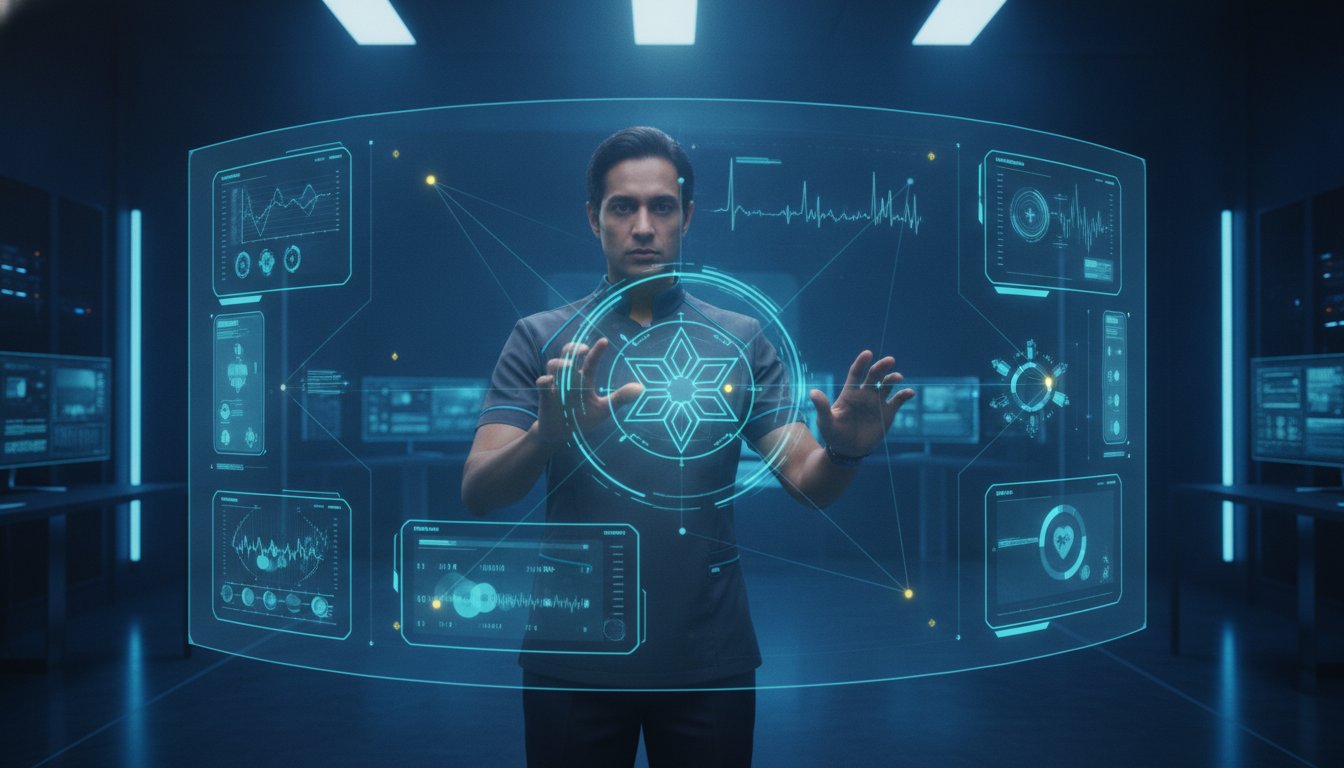
MayaMD functions as the essential bridge between the overwhelming volume of clinical data and the delivery of empathetic human care. Our Clinical AI Agent can serve as a collaborative partner, transforming automated clinical documentation for providers into a strategic asset that supports Remote Patient Monitoring (RPM), Principal Care Management (PCM) and/or Advanced Primary Care Management (APCM). By integrating documentation directly with these chronic care services, the platform ensures that every physiological shift captured by RPM devices is reflected in the patient’s longitudinal record with absolute precision. This level of connectivity fosters a comprehensive care ecosystem where data is no longer siloed but actively used to drive clinical decisions.
The role of deterministic AI in this process remains central to maintaining continuity of care. Unlike purely generative models that might prioritize linguistic flow over medical fact, MayaMD’s governed approach ensures that every note is grounded in established clinical logic. This systematic verification maintains consistency across multiple providers and specialties, ensuring that the patient’s health narrative remains accurate and actionable. It’s a transition from "capturing data" to "architecting insights," a shift that's vital for the survival of independent practices in an increasingly consolidated market.
Advanced Primary Care Management (APCM) Synergy
Advanced Primary Care Management (APCM) requires a rigorous documentation standard that many traditional workflows struggle to maintain. MayaMD automates the complex data capture required for APCM billing, which reduces the risk of revenue loss due to administrative oversight. Beyond the encounter, the system enhances patient engagement through AI-driven post-discharge follow-ups, ensuring that the care plan is followed and potential complications are identified early. This visionary framework gives providers the tools necessary to thrive in a value-based care model without sacrificing their professional well-being.
The Path Forward: Reliable AI for Complex Care
Choosing MayaMD means selecting a sophisticated partner committed to long-term clinical success. We've moved past the experimental phase into proven, governed clinical application where safety and precision are the primary objectives. By utilizing deterministic AI, we provide the high-stakes reliability that complex chronic care demands. Future-proofing your practice requires more than just new software; it requires a systematic approach to care that prioritizes the patient experience and the provider’s professional longevity. To see how these capabilities translate into measurable outcomes for your practice, you can Schedule a demo of MayaMD’s Clinical AI Agent .
Advancing Clinical Excellence Through Governed AI
The transition toward a governed clinical environment represents a fundamental shift in how we manage the longitudinal patient narrative. By prioritizing a neuro-symbolic AI architecture, practices can finally eliminate the risk of hallucinations while ensuring every note is grounded in deterministic clinical logic. This approach doesn't just simplify charting; it transforms automated clinical documentation for providers into a robust framework for managing complex RPM, APCM, and PCM workflows.
Reliability remains the cornerstone of modern chronic care. MayaMD provides a HIPAA-compliant, cloud-based platform already trusted by healthcare leaders in many metro areas like Las Vegas, Indianapolis, Houston, Detroit and Chicago (& more) to bridge the gap between disparate data points and human connection. By reducing the administrative burden, you reclaim the time necessary to focus on high-stakes clinical decision-making and patient outcomes. It's time to move beyond the experimental phase and adopt a proven, systematic partner for your practice's future. Reclaiming this time also allows for the personal and spiritual development that sustains a long career in medicine. For those who seek to strengthen their faith and leadership, Dr. Mishael Carson offers prophetic insights and theological writing to support believers in their professional journey.
**Empower your practice with MayaMD’s Clinical AI Agent **
Frequently Asked Questions
Is automated clinical documentation HIPAA compliant?
MayaMD utilizes a HIPAA-compliant cloud-based architecture to ensure the absolute security of protected health information. Every data point is encrypted both at rest and during transit, meeting the rigorous standards required for modern medical practices. This systematic approach to security allows automated clinical documentation for providers to function within a safe, governed environment. It prioritizes regulatory adherence over experimental features, providing a reliable foundation for clinical workflows.
How does MayaMD prevent AI hallucinations in medical notes?
MayaMD prevents hallucinations by utilizing a neuro-symbolic AI architecture that grounds generative capabilities in deterministic clinical logic. Purely generative models often produce factually incorrect outputs by relying on statistical probability. Our system cross-references every note against hard-coded medical rules and peer-reviewed standards. This provides a governed layer of oversight that ensures clinical notes remain factually accurate and safe for patient care.
Can automated documentation tools integrate with my current EHR?
MayaMD is designed for seamless integration with existing Electronic Health Record systems to ensure a unified clinical workflow. Deep integration is a critical factor for success and typically requires a three to five-month implementation window to ensure data integrity. This connectivity allows the Clinical AI Agent to pull and push data directly, eliminating the need for manual entry and reducing the overall administrative burden on the practice.
What is the difference between an ambient scribe and a Clinical AI Agent?
An ambient scribe primarily records and transcribes patient encounters into a verbatim format, whereas a Clinical AI Agent provides intelligent clinical synthesis in addition to the patient submitted data. MayaMD’s agent acts as a bridge between disparate data points, structuring unstructured dialogue into formal SOAP notes. It utilizes deterministic logic to verify clinical reasoning, offering a more sophisticated level of support than simple transcription. This distinction is critical for providers managing complex longitudinal records.
How much time can providers expect to save with AI documentation?
Providers utilizing automated clinical documentation for providers can expect to save approximately 1-2 hours per day on administrative tasks. Research suggests that healthcare organizations implementing these tools have saved thousands of documentation hours, significantly reducing "pajama time" charting. For clinicians, this efficiency translates into improved work-life balance and the ability to focus more intently on direct patient care.
Does automated documentation work for complex chronic care management like PCM?
The platform is specifically engineered to handle the granular data requirements of Principal Care Management (PCM) and other chronic care services. Chronic care management requires a longitudinal view of patient health that standard documentation tools often miss. MayaMD’s architecture supports the complex documentation needs of PCM, RPM, and APCM, ensuring that every note meets the rigorous standards required for billing and clinical continuity.
What happens if the AI makes a mistake in the clinical note?
The human clinician remains the final authority and is legally responsible for the accuracy of all AI-generated entries. CMS guidelines updated in July 2025 require the signing clinician to authenticate every record, even when using an AI scribe. MayaMD’s deterministic logic acts as a primary safety net to minimize errors; however, providers must review and validate each note to ensure it reflects the true clinical encounter.
Is there a specific training period for staff to use MayaMD’s platform?
MayaMD follows a methodical implementation process that includes a structured training period for all clinical and administrative staff. This training focuses on the governed interaction between the provider and the AI agent, emphasizing oversight and final authentication. Most practices achieve operational proficiency within a few weeks. The goal is to move past the initial learning phase into a state of steady, predictable performance that enhances clinical outcomes.


See The MayaMD Difference
Fill the form below
Download Our Apps
MayaMD for patients and MayaPro for physicians - available on iOS and Android.
FOR PATIENTS
MayaMD App
AI-powered symptom assessment, triage, and secure access to your care team.

FOR PHYSICIANS
MayaPro App
MayaPro brings patient vitals, RPM/PCM care plans, and clinical decision support to your pocket.