
Using RPM Data to Personalize Care Plans and Act Early

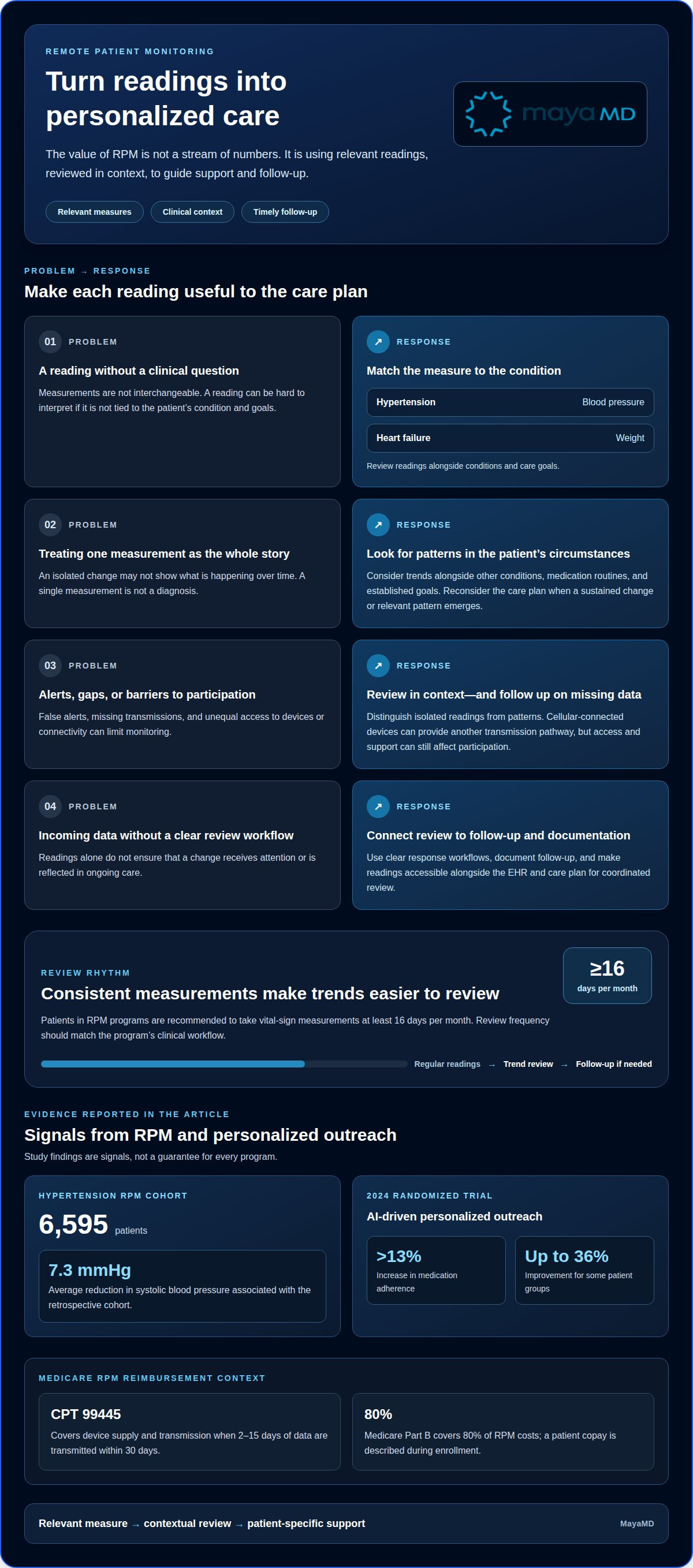
A reading matters most when it helps guide the next care decision. Remote patient monitoring (RPM) collects health information, such as blood pressure readings, while a patient is at home. Using RPM data to personalize patient care plans helps care teams respond to individual trends, tailor support, and follow up when a change needs attention.
It’s understandable to expect more than a stream of numbers from a monitoring program. The value comes from connecting those readings with a patient’s health needs and making them useful in ongoing care. This article explains how RPM works, how teams can use incoming data to tailor care plans and track changes, and how timely follow-up can support early intervention.
Key Takeaways
• RPM turns readings collected outside the clinic into information care teams can use to guide ongoing care.
• Choosing relevant measures and interpreting them in context helps teams distinguish meaningful changes from isolated readings.
• Care plans are more useful when monitoring data informs patient-specific goals, education, and follow-up.
• Consistent review and clear response workflows help care teams identify changes that may call for timely attention.
• Connected monitoring and engagement tools can support continuity for people managing chronic conditions.
What is Remote Patient Monitoring?
Remote patient monitoring (RPM) uses connected devices to collect health readings outside a clinic. Care teams can review those readings alongside a patient’s chronic conditions and care goals.
RPM in Chronic Care Management
In chronic care management, RPM readings help inform ongoing support for chronic conditions. For a patient managing hypertension and heart failure, blood pressure and weight readings offer distinct measures for the team to review. Chronic care management (CCM) coordinates support across conditions, while advanced primary care management (APCM) centers care within a primary-care framework. Together, these approaches connect monitoring information with a broader understanding of the patient’s needs.
CCM eligibility is described for patients with two or more chronic conditions expected to last at least 12 months. This matters when a care team is planning support across multiple diagnoses rather than treating each reading in isolation. A blood pressure change, for example, can be considered alongside the patient’s other conditions, medication routine, and established care goals.
Devices are selected according to the health measure relevant to the condition. Blood pressure monitoring commonly supports hypertension care, while weight readings are often used for patients with heart failure. Readings provide information for clinical review; they do not replace the care team’s assessment or the patient’s wider care plan.
Timely Chronic Disease Interventions
Timely chronic disease intervention means reviewing incoming readings and responding when a change merits attention. A series of blood pressure readings may prompt a clinician to assess whether the patient needs follow-up, education, or a care-plan adjustment. The key is to interpret the trend in the patient’s circumstances, rather than treat a single measurement as a diagnosis.
Medicare reimbursement for RPM uses service codes and depends on the monitoring and management provided. According to the Centers for Medicare & Medicaid Services, CPT 99445 covers device supply and transmission when 2-15 days of data are transmitted within 30 days. Medicare Part B covers 80% of RPM costs, with a patient copay described during enrollment.
RPM data can be made accessible within clinical workflows alongside electronic health records (EHRs) and care plans. The care plan should be maintained in a certified EHR and accessible to the patient and care team. A shared record helps clinicians review readings in context, document follow-up, and coordinate ongoing chronic care.
For example, when a patient’s weight readings change, the care team can review the trend alongside the heart failure plan and decide whether follow-up is appropriate. This approach supports personalized chronic-condition management by linking each measure to the patient’s conditions, goals, and planned support.
Remote therapeutic monitoring data and devices
Monitoring technology can capture different kinds of information, depending on the patient’s condition and care plan. The practical question is how readings become reliable, reviewable clinical information.
RPM Devices and Monitored Measures
RPM devices collect physiologic readings remotely, while therapeutic monitoring can include information about treatment and adherence. Remote patient monitoring commonly tracks blood pressure for hypertension and weight for heart failure. Cellular-connected devices can transmit readings over a cellular network, providing another pathway for data to reach the monitoring program. The selected measure should match the clinical question, so care teams can interpret information in relation to the patient’s condition and care plan.
Remote therapeutic monitoring can include respiratory or musculoskeletal status, medication or therapy adherence, and response. The 2022 Medicare Physician Fee Schedule proposal described these areas as possible RTM data. This distinction helps teams align the type of monitoring with the information they need, rather than treating every device reading as interchangeable.
RPM Data Accuracy and Analytics
When comparing RPM platforms, examine data quality, analytic usefulness, and fit with clinical workflows. Accuracy depends on the device and how readings are captured. Useful analytics make trends and missing measurements visible. Personalized planning also depends on whether clinicians can review results alongside the patient’s history and care plan, rather than relying on isolated alerts.
Practices should consistently review incoming readings and act on information that needs attention. Patients in RPM programs are recommended to take vital-sign measurements at least 16 days per month. Review frequency should match the program’s clinical workflow, with care plans reconsidered when a sustained change or relevant pattern emerges.
Risks in RPM-Based Care
False alerts, gaps in transmission, and unequal access can limit remote monitoring. Care teams need to interpret alerts in context, distinguish isolated readings from patterns, and follow up when measurements are missing. Cellular connectivity may help transmit readings, but access to devices, connectivity, and support can still affect participation.
Evidence offers useful signals, not a guarantee for every program. A retrospective cohort of 6,595 patients in a hypertension RPM program was associated with an average 7.3 mmHg reduction in systolic blood pressure. A 2024 randomized trial of AI-driven personalized outreach found medication adherence increased by over 13%, with some patient groups improving by as much as 36%.
Evaluate a program by connecting measures, engagement, clinical review, and follow-up. Teams can assess whether readings arrive consistently, whether alerts lead to appropriate action, and whether care plans reflect emerging patterns. These checks also help practices assess whether monitoring workflows support documented services and reimbursement processes, without mistaking reimbursement for clinical value.
For teams shaping a monitoring workflow around their patients and clinical processes, discuss your care-management needs.
Personalized care plans and patient engagement
Remote patient monitoring is more useful when patients understand what to measure and providers connect results to an individual care plan. Onboarding, communication, and follow-up help turn device readings into participation in ongoing care. Personalizing care plans with RPM data also means matching support to each patient’s goals and ability to participate.
Onboarding for a Practical Start
Onboarding establishes how monitoring fits into a patient’s routine and clinical goals. For example, a patient tracking blood pressure needs clear guidance on using the device, submitting readings, and understanding what happens after transmission. Initial setup and patient education are covered by CPT 99453. These steps help patients begin with a shared understanding of the monitoring process.
Use onboarding to identify barriers before they disrupt participation. A patient who has difficulty using a device may need additional instruction, while someone with limited connectivity may need a different workflow. The care team can explain who reviews readings and how patients should raise concerns. Clear expectations make patient engagement part of care delivery, not an afterthought.
Personalizing the Care Plan
A personalized plan connects monitored measures with the patient’s conditions, goals, and agreed actions. For example, a patient managing hypertension may need a plan that pairs blood pressure monitoring with clinician feedback and relevant education, such as nutritional counseling from Wise Eats Registered Dietitians. Another patient may need support focused on medication routines or therapy adherence. Care plans should reflect these differences rather than give everyone identical instructions.
For continuity, an RPM patient’s care plan should be maintained in a certified electronic health record and accessible to the patient and care team. This shared record helps providers align monitoring goals, document follow-up, and update care as needs change. It also helps patients see how daily participation relates to their wider treatment plan. Personalizing care plans with RPM data makes the connection between readings and agreed actions explicit.
Engagement and Adherence
Patient engagement depends on communication that is relevant, understandable, and connected to the care plan. A message about a missed reading, for example, can explain why the measurement matters and what the patient can do next. Providers can adapt the tone and timing of outreach to the patient’s needs, while keeping clinical review and follow-up within the care workflow.
A 2024 randomized clinical trial of AI-driven personalized patient outreach found medication adherence increased by over 13%. Some patient groups in the trial saw improvements as high as 36%. These results illustrate how tailored communication may support adherence; they don’t mean the same effect will occur for every patient or program.
Evaluate more than completed readings. Providers can review participation patterns, patient questions, and whether planned follow-up occurred. If engagement changes, the team can revisit the care plan, clarify instructions, or address a practical barrier. This feedback loop keeps the platform connected to human care and helps remote monitoring remain relevant to each patient.
Using real-time RPM data to spot health trends and deterioration
Individual readings gain meaning when clinicians review them over time and in context. Trend reports can help healthcare teams spot changes and decide whether a chronic disease care plan needs attention.
Biometric Trends and Care Plan Changes
Biometric trends show how a patient’s health measures change across repeated readings, rather than presenting each result in isolation. A trend report can help clinicians see whether blood pressure is consistently rising or varying from one reading to another.
Teams can compare these patterns with the patient’s existing care plan, symptoms, and relevant clinical history. If a pattern suggests a change, they can decide whether education, follow-up, or a plan adjustment is appropriate. This connects continuous health data with individualized interventions.
Personalized RPM Alert Thresholds
Personalized alert thresholds define which readings should prompt clinical review for an individual patient. Clinicians can set them based on the patient’s baseline, condition, care goals, and the potential significance of a concerning change.
A threshold should support clinical judgment, not replace it. Teams can assess whether alerts reflect meaningful changes, then refine the care plan and response process as they review incoming readings. Clear escalation steps help distinguish an urgent alert from a pattern that calls for routine follow-up.
Rules for RPM Care Planning
In the United States, HIPAA is relevant to how covered organizations handle identifiable health information, while FDA considerations relate to a device’s regulatory status and intended use. Applicable safeguards and device considerations depend on the organization and the device.
FDA Class 1 regulated devices are identified as a gold standard in care for RPM device selection. For care planning, teams should consider the device’s intended use and ensure patient information is handled within appropriate privacy and security processes.
Data quality matters before a trend can inform a decision. A reading may be missing, delayed, or inconsistent with surrounding measurements, so clinicians should review the record and its context before changing a care plan. For example, a single unexpected measurement may call for a repeat reading or patient follow-up before it informs an intervention.
Useful trend reports make patterns visible without obscuring the underlying readings. Clinicians can review direction of change, consistency, and transmission gaps, then document their interpretation and any follow-up in the patient’s record. This clarifies the path from health data to clinical action.
Monitoring is most actionable when the response is defined in advance. A program can specify who reviews alerts, how the team handles missing readings, and when a clinician reassesses the patient’s plan. These workflow steps support consistent care while keeping decisions grounded in the patient’s circumstances.
Early detection and prevention of hospitalization
An RPM program can bring changes in a remote patient’s health to the care team’s attention between appointments. Its clinical value depends on reviewing those signals and connecting them with appropriate care management.
Recognizing Changes That Need Attention
For people with chronic conditions, a shift in monitored readings can prompt closer review before the next scheduled visit. For example, a care team monitoring a patient with heart failure can consider weight readings alongside symptoms, medication routines, and the existing care plan. A change is a signal to assess, not a diagnosis by itself.
RPM can also help teams identify care gaps. Approximately 66% of surveyed primary-care physicians said remote monitoring identifies care gaps. A team can use a missed measurement, an emerging pattern, or a patient’s question as a reason to review whether planned follow-up or chronic care support is needed.
Connecting Alerts to Clinical Follow-Up
Early detection requires a clear path from a reading to a response. The care team reviews the information, considers it alongside the patient’s baseline and other clinical context, then decides whether follow-up is appropriate. If medication questions or adherence concerns arise, the team can address them within the patient’s care-management plan.
The process should also account for missing information. If expected readings stop arriving, the team can consider whether the patient needs help with the device, a reminder, or another form of follow-up. Clear responsibility for reviewing alerts helps prevent important signals from going unattended in a monitoring platform.
What Outcome Evidence Can Tell You
Findings from RPM programs offer encouraging signals, but results depend on the population and program. One large-scale study found a 59% reduction in hospital admissions among patients enrolled in remote patient monitoring. An adult oncology hospital-at-home program found enrolled patients were 58% less likely to have an unplanned hospital stay during their first 30 days.
Findings from different care settings should not be treated as a forecast for every chronic care program. They do show why teams need to assess whether monitoring information leads to timely clinical review and relevant follow-up, rather than simply count device readings.
To evaluate an RPM program, care teams can review alert handling, patient contact, and whether follow-up actions are documented. Comparing these workflow measures with changes in utilization can help teams understand where care management is working and where it needs adjustment. The goal is to support decisions before a health concern escalates, not to promise that every hospitalization can be avoided.
Discuss RPM care-management needs to explore how monitoring can fit into your clinical workflow.
MayaMD: remote patient monitoring for chronic care management
MayaMD supports care teams seeking to connect remote patient monitoring with ongoing chronic care management. Its cloud-based platform facilitates RPM and PCM, helping maintain continuity of care for patients with chronic conditions. Through remote patient monitoring for chronic care, teams can use patient data as part of structured clinical support. A Clinical AI Agent and AI patient engagement solutions can also support communication with patients throughout their care journey.
This approach may suit healthcare organizations looking to strengthen monitoring workflows, personalize patient engagement, or support follow-up after discharge. A useful next step is to discuss how these capabilities align with your care-management goals and clinical processes.
Contact MayaMD to discuss your care-management needs.
Turn Monitoring Insight Into the Next Care Decision
Using RPM data to personalize patient care plans is an ongoing clinical practice, not a one-time technology decision. Define how monitoring information will shape care: which patients need the most support, what changes merit review, and how the care team will respond. Clear ownership and an agreed workflow connect patient data with meaningful follow-up.
MayaMD offers a Clinical AI Agent, AI patient engagement solutions, and automated post-discharge communication solutions. Its capabilities support patient communication across chronic care and transitions after discharge, while clinical teams remain central to care decisions. Contact MayaMD to discuss how remote patient monitoring fits your population, care-management priorities, and existing workflows.
Contact MayaMD to discuss RPM and take the next step toward a monitoring approach aligned with your care goals.
Frequently Asked Questions
What does an RPM program include?
An RPM program combines remote measurement, data transmission, clinical review, and patient follow-up. The care team identifies the health measures that matter for a patient, explains how to collect them, and decides how readings enter its workflow. For example, a hypertension program may collect home blood pressure readings for review. A clear process also identifies who reviews incoming information and how patients can receive care guidance.
What is considered RPM data?
RPM data includes health information collected remotely through monitoring devices, such as blood pressure readings or weight measurements. It can also include patterns in those readings, such as changes over time or gaps in submitted measurements. Remote therapeutic monitoring may involve information about respiratory or musculoskeletal status, medication or therapy adherence, and response. Relevant data depends on the patient’s condition and the clinical purpose of monitoring.
How is remote patient monitoring (RPM) data used to personalize care plans?
Care teams use RPM data to tailor follow-up to a patient’s measurements, condition, and care goals. For instance, a team may review recent readings alongside the patient’s established plan and decide whether to reinforce education, discuss medication routines, or arrange clinical follow-up. Data informs these decisions but does not replace clinical assessment. A useful plan records what the patient should monitor and how the team will respond.
Which RPM metrics are most useful for tailoring patient care?
The most useful measures relate directly to the patient’s health needs and care objectives. Blood pressure readings can inform hypertension management, while weight measurements may be relevant for a patient with heart failure. Depending on the monitoring approach, teams may also review respiratory or musculoskeletal status, medication adherence, or therapy response. A metric is most useful when clinicians can interpret it in context and connect it to a care action.
What steps do providers follow to turn RPM data into personalized interventions?
Providers first identify the care question and select relevant measures. They then review incoming readings for trends, gaps, or changes that merit attention, interpreting them alongside the patient’s history and current plan. Next, the team determines an appropriate response, such as education, follow-up, or a plan update, and documents the action. For example, repeated missed readings may prompt outreach to find out whether the patient needs help with the monitoring routine.
What HIPAA and FDA rules apply to using RPM data for care planning in the United States?
The guidance identifies FDA Class 1 regulated devices as the gold standard for RPM device selection and says the care plan should be kept in a certified EHR accessible to the patient and care team.




See The MayaMD Difference
Fill the form below
Download Our Apps
MayaMD for patients and MayaPro for physicians - available on iOS and Android.
FOR PATIENTS
MayaMD App
AI-powered symptom assessment, triage, and secure access to your care team.
FOR PHYSICIANS
MayaPro App
MayaPro brings patient vitals, RPM/PCM care plans, and clinical decision support to your pocket.