
Managing Patient Alerts in an RPM System: How It Works

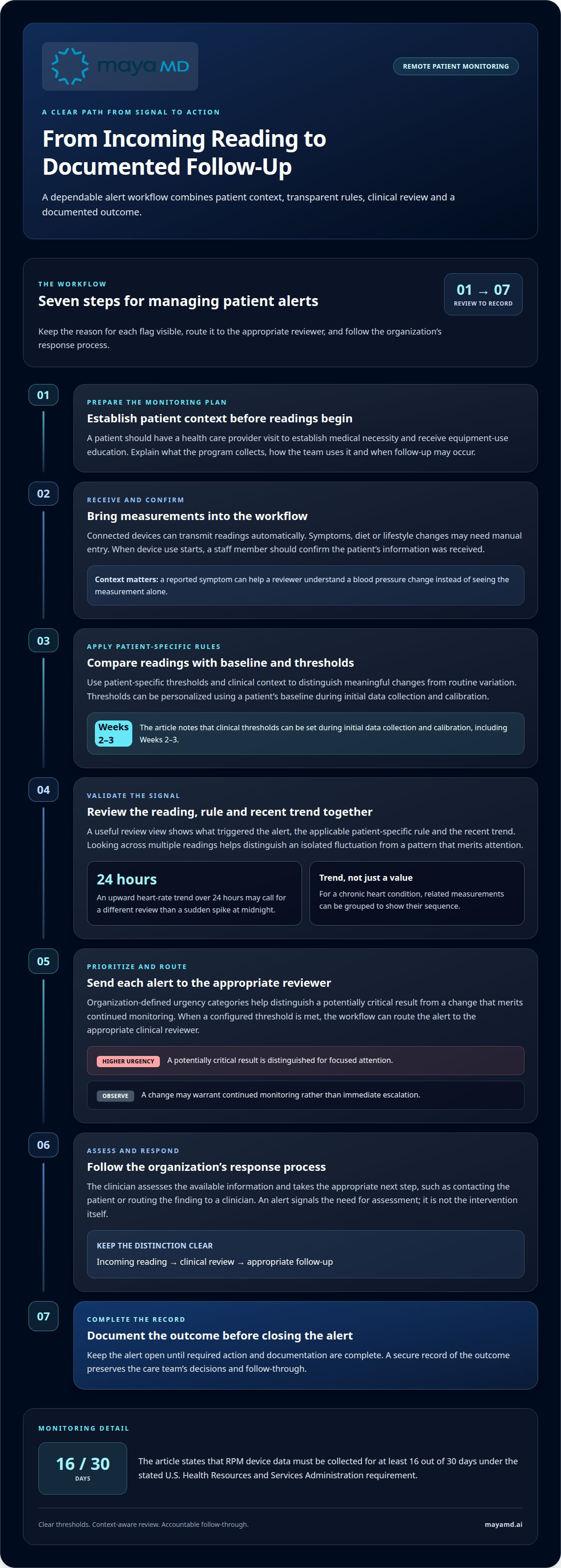
RPM works when patient readings become clear priorities that the care team reviews and follows through with documented action. Managing patient alerts in an RPM system means applying clinical thresholds and patient context to incoming data, so teams can distinguish concerning patterns from readings that need routine observation. Each alert should follow a defined path: review, outreach or escalation when appropriate, and a secure record of the outcome.
Remote monitoring should do more than collect numbers. An alert is useful only when the team understands why it appeared and what response it calls for. This article explains how RPM data is organized by urgency, how trends inform alert review, and how care teams manage follow-up and secure documentation. Together, technology and clinical oversight support continuity of care.
Key Takeaways
• Use patient-specific thresholds and clinical context to distinguish meaningful changes from routine variation.
• Prioritize alerts by severity so care teams can focus attention where it may be most urgent.
• Define who reviews alerts, what follow-up is appropriate, and when findings should be escalated.
• Keep alerts open until required action and documentation are complete, preserving a clear record of care-team decisions.
• Apply role-based access and audit trails to support controlled access to patient information and accountable workflows.
AI-assisted filtering of clinically important information
AI-assisted filtering organizes RPM readings so teams can identify information that may need clinical review. Managing patient alerts in an RPM system requires clear thresholds, patient context, and workflows that show why each alert appeared.
Validating Alerts and Building Trust
Alert validation checks whether a signal meets defined rules and has enough context to warrant attention. An upward heart-rate trend over 24 hours may call for a different review than a sudden spike at midnight.
Clinicians need to see what triggered an alert. A useful review view displays the reading, applicable patient-specific rule, and recent trend together. If the trigger is unclear, the reviewer has less basis for action. Transparent logic also helps teams identify thresholds that generate repeated, low-value notifications.
Dashboards and AI-Generated Alerts
A clinical dashboard presents AI-generated alerts in a shared view for authorized team members. Organization-defined urgency categories help distinguish a potentially critical result from a change that merits continued monitoring.
The dashboard should show why each reading was flagged, not just display an alert label. For a patient with a chronic heart condition, it could group related measurements and show their sequence. A clinician can then assess whether the pattern differs from an isolated value instead of reviewing disconnected readings.
At intake, systems can align Observation codes and route information according to established rules, giving organizations a more consistent view of trends across connected workflows. Managing patient alerts in an RPM system is more transparent when reviewers can trace each flag to its source reading and applicable rule.
From Data Transmission to Intervention
Data transmission moves device readings into the system, where alert rules can be applied. When a value meets a configured threshold, the workflow can route it to the appropriate clinical reviewer.
For example, a transmitted blood pressure reading outside a patient’s set range can appear with its timestamp and recent measurements. The reviewer assesses the available information and follows the organization’s response process, such as contacting the patient or routing the finding to a clinician. Linking transmission to review helps data inform timely follow-up.
An alert signals the need for assessment, it is not the intervention itself. Its clinical value depends on connecting the incoming reading to a clear review path and an accountable next step.
Analyzing real-time patient data for abnormal patterns
Real-time review compares incoming measurements with a patient’s baseline, configured thresholds, and recent trends. False positives can prompt unnecessary outreach and contribute to alert fatigue; missed or delayed alerts can postpone review of concerning changes.
How RPM Data Is Received and Used
RPM data is transmitted from connected devices into a system where care teams can review measurements alongside relevant patient information. Readings have more meaning when interpreted in light of trends, symptoms, and the patient’s monitoring plan.
Before remote monitoring begins, a patient should have a visit with a health care provider to establish medical necessity and receive equipment-use education. When device use starts, a staff member should confirm that the patient’s information was received. This acknowledgement explains how data enters the workflow and gives patients a clear starting point for questions about using the equipment.
Readings may be transmitted automatically, while symptoms, diet, or lifestyle changes may require manual entry. For example, a reported symptom can help a reviewer understand a blood pressure change instead of viewing the measurement alone. Explain what the program collects, how the team uses it, and when follow-up may occur to help patients take part in monitoring.
Managing Data Noise and Alert Fatigue
Data noise includes readings that briefly cross a threshold without indicating a sustained change. Continuous monitoring can generate repeated signals, so teams need patient-specific thresholds and a review of multiple readings over time.
During onboarding, teams can use a patient’s baseline to personalize alert thresholds. Clinical thresholds can be set during initial data collection and calibration, including Weeks 2-3. For example, a single measurement outside a patient’s usual range may be reviewed alongside later readings before it is treated as a concerning trend. This approach helps distinguish an isolated fluctuation from a pattern that merits attention.
Too many low-priority notifications can compete with alerts that need prompt review. Organizations can reduce overload by applying defined criteria and grouping related readings into trends. A chronic care program may also consider reported symptoms or lifestyle changes when interpreting device measurements. A coherent review process gives teams a more useful picture than a queue of disconnected values.
Risks of False or Delayed Alerts
A false positive flags a reading as concerning when review finds no meaningful issue; a missed alert fails to surface a reading that needs attention. Both can disrupt care: repeated false alarms consume review time, while an overlooked change may delay appropriate follow-up.
For example, if a brief out-of-range reading generates repeated notifications, staff may spend time revisiting the same event. If a sustained change is buried among routine readings, review may be delayed. These risks make alert criteria, patient context, and clear routing essential parts of monitoring, not merely technical settings.
Data collection also connects to program documentation. RPM device data must be collected for at least 16 out of 30 days under the stated U.S. Health Resources and Services Administration requirement. The described RPM billing documentation includes a 20 minutes monthly time requirement. Defined workflows help teams track readings and review activity without treating every transmitted value as a separate clinical event.
Organizations refining connected RPM workflows can discuss their monitoring needs and how data review fits their care processes.
Care-team follow-up and escalation
An RPM alert needs an assigned reviewer, a defined response path, and a documented outcome. Clear ownership helps the care team distinguish completed follow-up from an unresolved clinical concern.
Routing and Escalation Logic
Routing logic assigns each alert to a responsible reviewer or pathway according to its urgency and the patient’s monitoring rules. A blood pressure alert that needs clinical assessment should not sit in a general queue without an owner.
For each alert category, organizations define who reviews the finding and what criteria trigger escalation. A designated clinician, provider, emergency pathway, or responsible team receives findings that meet those criteria. Routing should also keep unresolved alerts visible, so a missed handoff does not make an open concern appear complete.
For example, a reviewer may assess a concerning reading, document the review, and send it to the designated provider if escalation criteria are met. If nursing judgment indicates that no call is needed, the RN records the rationale.
Designing the Escalation Model
An escalation model defines alert ownership, urgency categories, and the next action for each type of finding. A structured model helps staff respond consistently across a patient population, not just in a familiar case.
Organizations can map each alert category to a reviewer, response action, and next step if the concern remains unresolved. A designated caregiver can monitor each patient’s alerts and escalate critical cases. In a chronic care program, the model should distinguish routine observations from findings that meet criteria for prompt clinical review.
The model should also explain how the team handles unavailable reviewers and incomplete handoffs. For example, an alert awaiting provider input remains visible until the next responsible person accepts or resolves it. Defined ownership preserves the ability to act without implying that every finding requires the same response.
Alert Closure and Follow-Up
Alert closure means required review, follow-up, escalation, and documentation are complete. Closing an alert too early can hide an issue that still needs action from the care team.
When outreach is required, the nurse contacts the patient, confirms relevant information, documents the interaction, and provides guidance authorized by the organization’s workflow and scope rules. If the patient doesn’t respond, staff follow the program’s established nonresponse and escalation pathway, documenting attempted contact and keeping the concern visible until required steps are complete.
When an alert is reviewed, the RN documents the review and any intervention or education provided. An unresolved item stays open with its next action identified, rather than being marked complete simply because someone viewed it.
Workflows and Staffing for Alert Management
Staffing and workflow design assign alert review to qualified team members and define how work moves between them. These arrangements matter because the number and urgency of alerts across a patient population shape daily review demands.
In the described RPM workflow, an RN reviews each alert received during the business day within 4 hours. Programs can track alert-to-review time and unresolved queue age to identify delays or stuck items. Those measures help organizations see whether assigned work is reaching a reviewer and whether follow-up remains pending.
Effective staffing also balances nurse outreach with ongoing monitoring. A defined queue, assigned coverage, and escalation route support consistent handling, while helping the care team see who owns each alert and what action remains. If an RN decides a patient call isn’t required, documenting the clinical rationale keeps that decision accountable.
HIPAA compliance, audit trails, and role-based access
RPM security combines controlled access, documented system activity, and clear handling of transmitted patient information. Operational safeguards should support appropriate review of each alert while limiting access to people with a defined role.
Protecting Patient Data in RPM Workflows
A HIPAA-conscious RPM workflow uses internal security controls and a platform designed to protect patient data. Role-based access assigns permissions according to each user’s responsibilities, such as reviewing readings, documenting outreach, or managing system settings. Separating these functions helps limit unnecessary access to clinical information.
For example, a nurse reviewing a blood pressure alert needs the relevant patient readings and care context. That role may not require permission to change organization-wide alert rules. Access should match the work being performed, and the system should record actions relevant to the patient’s monitoring record.
Audit trails create a traceable history of events, including alert review, updates, and follow-up documentation. If an alert changes status, the record should show what happened and which authorized role performed the action. These records support accountability across clinical workflows and help organizations examine how an alert moved from intake toward resolution.
Device and Privacy Considerations
Device governance and patient-data privacy address related but distinct concerns. The U.S. Food and Drug Administration identifies the Quality System Regulation for medical devices as 21 CFR Part 820. This identifier concerns medical-device quality-system regulation; it should not be presented as a complete privacy framework for an RPM program.
Device transmission and platform access are separate parts of the workflow: a device sends readings, while access controls govern who can view them. Keep those operational responsibilities clear when documenting and reviewing alerts.
Patient Engagement and Notifications
Patient engagement supports reliable monitoring by explaining device use, data transmission, and the purpose of notifications. At program start, staff should confirm that the patient’s information has been received. This acknowledgement can clarify whether a device is connected and help patients understand what the system collects.
Notifications should fit the organization’s workflow and tell patients what action is appropriate, such as contacting their provider when readings fall outside the range set for their condition. Clear instructions distinguish an informational message from a request for follow-up. For example, a patient who knows how to report symptoms can provide context alongside automatically transmitted readings.
Documenting notification delivery and related interactions connects engagement to the clinical record. Role permissions, audit trails, device workflows, and patient communication make RPM alert handling more traceable without treating every user or notification as having the same purpose.
Organizing physiologic readings and patient alerts
RPM systems organize readings by patient, measurement, configured range, and urgency. They can generate alerts for out-of-range values, concerning trends, and readings that prompt patients to contact their providers.
Out-of-Range Readings and Provider Contact
An out-of-range alert identifies a measurement beyond the range set for the patient’s monitored condition. A clearly defined alert can tell patients when to contact their provider and help teams prioritize review.
For example, a blood pressure reading outside a patient’s configured range can prompt a notification explaining the next step. The alert rule should reflect the organization’s protocol and the patient’s care plan, rather than assume one threshold suits everyone. Clear instructions also distinguish a request to contact a provider from an emergency message.
Providers can use collected RPM data to adjust medications or treatments. An alert does not make that decision; it surfaces a reading for clinical assessment. The provider can consider the measurement alongside other readings, patient-reported symptoms, and monitoring context before deciding on follow-up.
Reviewing and Checking Unusual Readings
Reviewing an unusual reading means assessing its accuracy and context before deciding what it requires. A single value may not represent the patient’s broader pattern.
A care team member can compare the reading with earlier measurements, check its timestamp, and review reported symptoms. For instance, an isolated high value followed by readings closer to the patient’s usual range presents a different pattern from repeated elevated measurements. The review should follow the organization’s protocol, with the rationale for the next action documented.
When data remains concerning, the RPM workflow can route the finding to the responsible provider. A patient or caregiver who notices unusual readings in a summary can also help contact the provider. This gives the care team another way to learn about a concern, while leaving clinical interpretation to the appropriate professionals.
Types of RPM Patient Alerts
RPM patient alerts are notifications triggered by configured rules for physiologic readings or patterns. Knowing the alert type helps patients understand the message and helps providers organize review.
Common categories include an out-of-range measurement, a concerning change across readings, or a notification asking the patient to contact a provider. Teams can organize these by severity, routing critical cases ahead of lower-priority items. For example, a sustained trend may receive a different priority from a single reading that needs routine review.
Organized readings also support operational records used in monitoring and reimbursement workflows. Keeping the value, timestamp, alert category, and review outcome together helps staff understand how a finding was handled. To discuss how alert organization can fit your RPM care workflows, connect with the team.
MayaMD
MayaMD supports care organizations connecting patient communication with clinical workflows around remote monitoring. Its cloud-based, HIPAA-compliant clinical AI platform combines deterministic logic with generative AI to support people living with chronic conditions. For teams assessing how alerts fit into broader patient engagement, MayaMD’s Clinical AI Agent and AI patient engagement solutions support communication and continuity of care.
These capabilities are useful when an organization is considering how patients receive information, share updates, and stay connected with their care team. They complement clinical protocols for reviewing readings, escalating concerns, and documenting follow-up.
Contact MayaMD to discuss your patient engagement and care workflow needs.
Make the Next Alert Easier to Act On
Connect alert logic with the decisions your care team makes each day. Consider how a reading moves from detection to review, who owns the next action, and how the workflow records the outcome. This operational view can reveal where handoffs need clearer ownership or patient communication needs a closer connection to clinical follow-up.
Effectively managing patient alerts in an RPM system takes more than configuring thresholds. It also depends on aligning technology, care-team responsibilities, and patient engagement with the program’s clinical processes. MayaMD’s healthcare AI and communication capabilities support organizations working to strengthen those connections across care workflows.
If your team is refining its RPM approach, contact MayaMD about RPM to discuss your priorities and care-delivery goals. A clearer path from patient data to coordinated action can help your organization build a more connected monitoring experience.
Frequently Asked Questions
How Does RPM Work?
Remote patient monitoring collects health readings from a patient outside an in-person visit and transmits them to a care team. A provider establishes the monitoring plan and explains device use; patients may also report symptoms or relevant lifestyle changes. The team reviews incoming information against the care plan, follows up when findings need attention, and records the resulting clinical activity. For example, a blood pressure trend can inform a provider’s treatment discussion.
Alert-to-review time: How long does it take for an assigned alert to receive initial review?
Alert-to-review time is the interval between assignment and a team member’s first review. One described RPM workflow has an RN review each alert received during the business day within 4 hours. Programs can measure this interval to identify delayed handoffs or queues that need more coverage. The metric records initial review, not necessarily patient contact, provider escalation, or completion of every follow-up step.
How does RPM help practices identify patient risk sooner?
RPM can surface changes between office visits by collecting readings over time, rather than relying only on measurements taken during appointments. A care team may notice a worsening pattern, such as repeated readings outside a patient’s established range, and assess it alongside reported symptoms. This visibility gives clinicians information to consider during follow-up and treatment planning. The alert supports assessment; it does not independently establish a diagnosis or determine treatment.
How to Determine Whether Your RPM Program Needs More Clinical Capacity?
Assess capacity by checking whether alerts receive timely initial review and whether open items remain unresolved as queues grow. Track alert-to-review time, overdue alert volume, unresolved queue age, patient contact rate, and duplicate handling. For example, a rising count of overdue alerts alongside repeated work on the same issue may indicate workflow strain. These measures help distinguish staffing pressure from routing or documentation problems before coverage is changed.
Unresolved queue age: Which items remain open, and why?
Unresolved queue age measures how long alerts remain open, while the queue shows which items still need action and why. Reasons may include awaiting patient contact, provider review, additional information, or a required documentation step. Reviewing these categories helps teams distinguish a pending clinical decision from a stalled handoff. Keep an item visible until the organization’s required review, escalation, and documentation are complete.
How should clinicians prioritize and triage RPM alerts by severity?
Clinicians should triage alerts using organization-defined urgency categories, patient-specific rules, and the clinical context of each reading. A tiered queue can surface critical cases before routine observations, while related measurements help reviewers distinguish an isolated value from a developing trend. For example, repeated out-of-range readings may warrant a different priority from one unusual measurement. The assigned reviewer should follow the established pathway for each category and document the decision.
What thresholds and escalation rules should be used for RPM alerts?
Thresholds should reflect the monitored condition, patient-specific baseline, and the organization’s clinical protocol. Teams can establish and calibrate thresholds during initial RPM data collection, including Weeks 2-3. Escalation rules should specify which role reviews each alert, what criteria trigger routing, and where qualifying findings go next. This structure gives reviewers a consistent basis for action while allowing patient-specific rules to shape interpretation.
How quickly should care teams respond to critical and routine RPM alerts?
Critical findings should follow the organization’s urgent escalation pathway, while routine alerts should receive review within the program’s defined window. In one described workflow, an RN reviews alerts received during the business day within 4 hours; this is a workflow example, not a universal response standard. Programs should define and monitor review windows by urgency, then track overdue alerts and unresolved items to identify delays.




See The MayaMD Difference
Fill the form below
Download Our Apps
MayaMD for patients and MayaPro for physicians - available on iOS and Android.
FOR PATIENTS
MayaMD App
AI-powered symptom assessment, triage, and secure access to your care team.

FOR PHYSICIANS
MayaPro App
MayaPro brings patient vitals, RPM/PCM care plans, and clinical decision support to your pocket.