
How to create care plan templates for chronic conditions

A chronic care plan should do more than list diagnoses. Effective care plan templates for chronic conditions organize measurable goals, planned interventions, care coordination, and support around each condition, while making room for the patient’s health concerns and social barriers. The template gives the care team a shared structure for turning clinical priorities into coordinated actions.
A clear, consistent format can make complex care easier for patients and the professionals supporting them. This guide explains what a chronic care management template should include and how to adapt it to individual needs. It covers documenting conditions and medications, setting practical goals, incorporating care protocols and self-management guidance, and accounting for factors such as household circumstances or access to community services. The aim is continuity of care, not simply completing a form.
Key Takeaways
• Organize each plan around the patient’s conditions, measurable goals, planned interventions, and care coordination responsibilities.
• Use SMART goals to turn broad health priorities into specific actions that can be reviewed and adjusted.
• Include medication details, health concerns, and follow-up fields so the plan supports consistent care over time.
• Assess social and environmental barriers, then document relevant community or support services as part of the care approach.
• Connect care protocols and patient monitoring to a clear process for reviewing progress and updating the plan.
What are care plans?
A care plan is a clinical record that connects a patient’s conditions with coordinated care, treatment, and follow-up. Build it around the person’s actual needs, not a generic form or diagnosis list.
•
Tailor the plan to patient needs and values
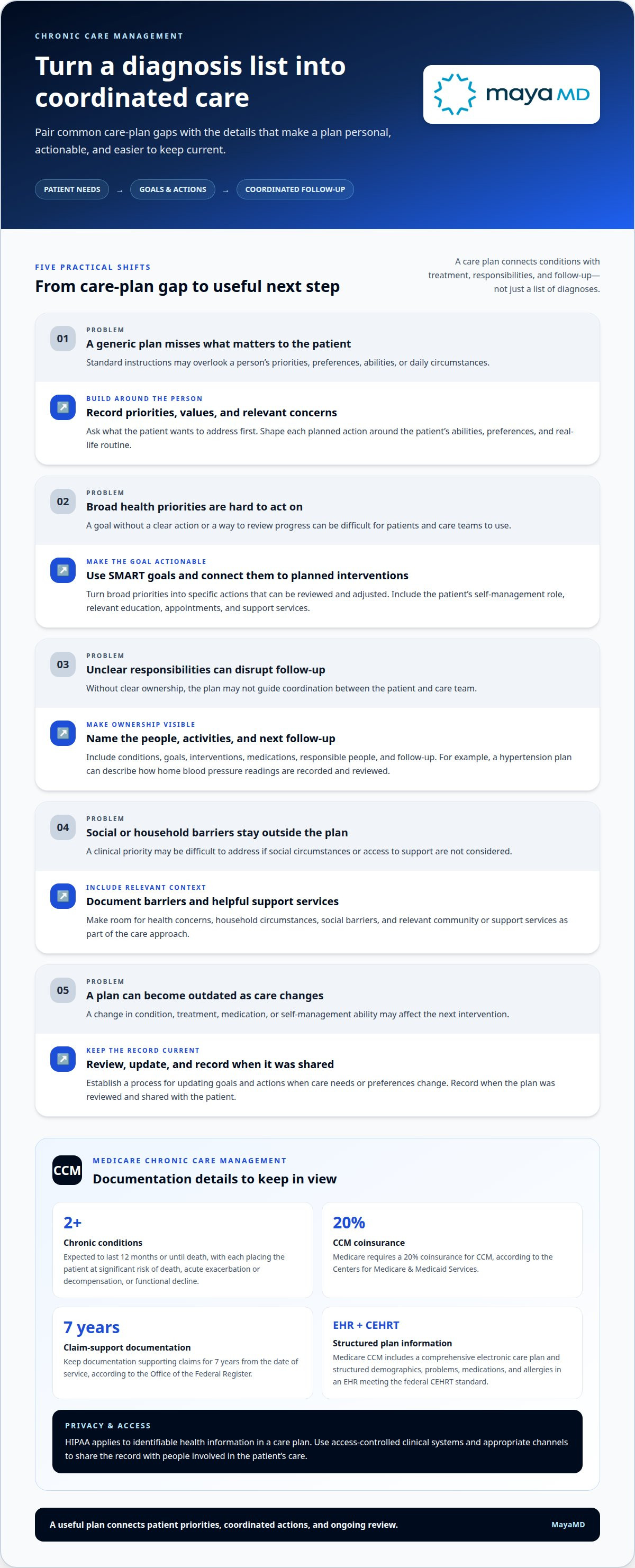
Start by recording the patient’s priorities and preferences alongside relevant conditions and the primary care physician’s assessment. Ask what the patient wants to address first, such as managing diabetes while maintaining a familiar meal routine. Make sure each planned action suits the patient’s abilities, daily circumstances, and goals. Avoid copying standard instructions that overlook individual needs.
•
Include interventions and self-management
Record the care team’s planned interventions and the patient’s role in daily self-management. For example, a hypertension plan could explain how the patient records home blood pressure readings and how the care team reviews them. Include relevant appointments, education, and support services, and assign responsibilities clearly enough to guide follow-up. Use the plan to coordinate care, not replace clinical judgment.
Record conditions and patient information.
Enter the patient’s chronic conditions, relevant history, and current clinical concerns in a structured record. For Medicare CCM, a patient must have at least two chronic conditions expected to last 12 months or until death, according to the Centers for Medicare & Medicaid Services. Each condition must also place the patient at significant risk of death, acute exacerbation or decompensation, or functional decline.
Document Medicare care-plan requirements.
A Medicare CCM record includes a comprehensive electronic care plan and structured information on demographics, problems, medications, and allergies in an EHR meeting the federal CEHRT standard. Medicare requires a 20% coinsurance for CCM, according to the Centers for Medicare & Medicaid Services. Keep documentation supporting claims for 7 years from the date of service, according to the Office of the Federal Register.
Protect and share the plan appropriately.
HIPAA applies to identifiable health information in a care plan. Use access-controlled clinical systems and share the record through appropriate channels only with people involved in the patient’s care. Make it available to relevant care professionals and provide a copy to the patient or caregiver when appropriate. Clear access practices help keep clinical information connected to care.
Review the record as care changes.
Establish a process for updating the plan when the patient’s condition, treatment, or preferences change. Record when it was reviewed and shared with the patient. A new medication or a change in self-management ability, for example, may affect the next intervention or follow-up. Keeping the record current helps the primary care team coordinate decisions and support patient care.
Writing and using a chronic care management plan
Treat the plan as a working record, keeping its goals, activities, and care coordination clear and useful to everyone involved.
•
Choose a customizable care plan template
Choose care plan templates for chronic conditions that let the care team tailor fields to the patient instead of forcing every case into identical entries. Include space for conditions, goals, interventions, medications, responsible people, and follow-up. A useful template can be revised as care needs change. Keep sections that show how the team coordinates chronic care management.
•
Select a template for the chronic condition
When choosing care plan templates for chronic conditions, select fields that support care for each condition, then adapt them to the patient’s other needs. A diabetes plan may track glucose-related goals and education, while a heart disease plan may document relevant symptoms and follow-up. COPD and arthritis plans also need condition-specific content. For patients with multiple diagnoses, coordinate the sections so the plan reflects the whole picture.
•
Choose a template format
Use a format that supports accurate updates and coordination among authorized care team members. An EHR can keep the plan connected to structured patient information, while a PDF or Word document may be easier to share or print within an established workflow. Make the current version identifiable and accessible to the people involved. Avoid keeping separate copies that may become inconsistent after revisions.
•
Download a free chronic disease template
Use the CMS Chronic Care Management Toolkit and the 2025 HCCI template as references for care-plan elements. Adapt a template to the patient and practice workflow instead of treating a sample as a completed clinical plan. If a form requires consent documentation, include the relevant field and record the patient’s decision. Keep the final plan connected to the patient’s care record.
Write a concise sample note.
A sample chronic care management note describes a 67-year-old male with hypertension, type 2 diabetes, and chronic kidney disease. Use a case summary to connect the conditions with current concerns, agreed goals, and planned coordination. Include the activities completed and the next follow-up action. Keep entries factual, relevant, and consistent with the patient’s current plan.
Help patients and caregivers use the plan safely.
Provide a copy and explain which goals, appointments, and activities it records. Clarify that the plan guides agreed care, but does not authorize independent changes to medication or treatment. Patients and caregivers can bring questions or observations to a care-team discussion. Record when the plan was reviewed and shared.
Writing and using a chronic care management plan
Treat the plan as a working record, keeping its goals, activities, and care coordination clear and useful to everyone involved.
•
Choose a customizable care plan template
Choose a structure that lets the care team tailor fields to the patient instead of forcing every case into identical entries. Include space for conditions, goals, interventions, medications, responsible people, and follow-up. A useful template can be revised as care needs change. Keep sections that explain how the team coordinates the patient’s chronic care management.
•
Select a template for the chronic condition
Choose condition-specific fields that support the care being documented, then adapt them to the patient’s other conditions. A diabetes plan may track glucose-related goals and education, while a heart disease plan may document relevant symptoms and follow-up. COPD and arthritis plans also need condition-specific content. For patients with multiple diagnoses, coordinate the sections so the plan reflects the whole picture.
•
Choose a template format
Use a format that supports accurate updates and coordination among authorized care team members. An EHR can keep the plan connected to structured patient information, while a PDF or Word document may be easier to share or print within an established workflow. Make the current version identifiable and accessible to the people involved. Avoid keeping separate copies that may become inconsistent after revisions.
•
Download a free chronic disease template
Use the CMS Chronic Care Management Toolkit and the 2025 HCCI template as references for care-plan elements. Adapt a template to the patient and practice workflow instead of treating a sample as a completed clinical plan. If a form requires consent documentation, include the relevant field and record the patient’s decision. Keep the final plan connected to the patient’s care record.
Write a concise sample note.
A sample chronic care management note describes a 67-year-old male with hypertension, type 2 diabetes, and chronic kidney disease. Use a case summary to connect the conditions with current concerns, agreed goals, and planned coordination. Include the activities completed and the next follow-up action. Keep entries factual, relevant, and consistent with the patient’s current plan.
Help patients and caregivers use the plan safely.
Provide a copy and explain which goals, appointments, and activities it records. Clarify that the plan guides agreed care, but does not authorize independent changes to medication or treatment. Patients and caregivers can bring questions or observations to a care-team discussion. Record when the plan was reviewed and shared.
Assessing social barriers and health concerns
Assess the patient’s clinical concerns alongside the circumstances that affect daily care. Document relevant findings and support needs so providers can connect them to appropriate care-plan actions.
Ask about daily circumstances.
Record employment status and household composition, including who lives with the patient or helps with care. These details can affect whether appointments, medication routines, or self-management activities fit the patient’s day. Use the patient’s account, and distinguish reported information from clinical observations in the electronic record.
Evaluate the home environment.
Document environmental factors that may affect the patient’s ability to follow the plan. For example, stairs, limited space, or an unsafe route to essential activities may create practical barriers. Record the specific concern and its connection to care rather than using a broad label that gives other providers little direction.
Assess safety concerns with care.
Include a field for threats of violence or injury, and document relevant information sensitively. If a patient describes a safety concern, record the concern and the response or support discussed. Avoid assumptions based on household composition alone; use the patient’s statements and clinical assessment to guide documentation and follow-up.
Review function and caregiver support.
Include activities of daily living and a caregiver assessment. Record which activities the patient manages independently and where assistance is needed. For example, note whether a caregiver helps organize transportation or daily routines. In complex cases involving severe injury or prolonged recovery, assessments from a life care planner expert witness can also help project ongoing medical and support requirements. This helps the care team understand practical support needs without assuming caregiver availability.
Include relevant psychological screening.
Record psychological or neuropsychological assessment information when it applies to the patient’s care. The Patient Health Questionnaire 2, or PHQ-2, is one example named in a sample template. As primary care clinicians such as Dr Nancy Allen note, thorough evaluations ensure that neurodevelopmental and behavioral health needs are appropriately integrated into ongoing management. Note the assessment and relevant findings in the appropriate clinical record; don’t treat a screening tool alone as a diagnosis.
Connect barriers to services.
Document whether community or social services were ordered, and list them when applicable. If transportation makes it difficult to attend appointments, for example, record the related support discussed or arranged. This gives providers a clear coordination point and keeps social needs visible alongside clinical concerns.
Set a follow-up action.
For each documented barrier or health concern, record the next step, who is responsible, and how the team will revisit the issue. If a patient reports difficulty completing a care activity, clarify the obstacle before changing the plan. A specific follow-up entry connects assessment findings with ongoing care.
Care protocols and care plans
Translate established care protocols into patient-specific actions, measures, and follow-up responsibilities. A complete plan connects primary care coordination with preventive care and chronic-condition monitoring.
Organize the plan around clinical priorities.
For each condition, document goals, measures, interventions, and assessments. Keep the primary target visible and identify the care provider responsible for follow-up. For example, pair a monitoring activity with a review process. This structure helps the team track care and recognize when an action needs reassessment.
Include relevant preventive care.
Add fields for flu, pneumonia, tetanus, and COVID-19 vaccinations. Include breast and colon cancer screenings, plus the annual wellness visit. These elements help the care team see preventive needs alongside chronic-condition priorities. Record the applicable status and follow-up plan, rather than using the template as a substitute for individualized clinical decisions.
Select measures that match the patient’s conditions.
A plan may track blood pressure, blood glucose, body mass index, resting heart rate, or nightly hours slept. For a patient monitoring pain, include the 0-10 scale. Choose measures that relate to the patient’s goals and document how the care team will review them. A target is useful when it informs a specific next step.
Make self-monitoring instructions specific.
A sample plan may ask a patient to monitor blood pressure at home twice daily and record blood sugar daily. Another example sets an HbA1c goal below 7.5% within 6 months, or an average home blood pressure below 140/90 within 90 days. Use such examples only as documentation models, not universal treatment targets.
Connect each protocol to follow-up.
For every measure or intervention, indicate who reviews the information and how it informs care coordination. A heart failure self-management example sets a daily sodium intake goal below 2 grams. Pair the target with the agreed monitoring and review process. This makes adherence visible without assuming that a recorded measure alone confirms progress.
Review and update the plan.
Update CCM care plans at least annually, and revise them when the patient’s circumstances or clinical needs change. Record the revision and ensure the current plan remains available to people involved in care. A structured review can identify outdated targets, missed preventive elements, or coordination gaps. Discuss chronic care coordination workflows to align digital processes with these plan requirements.
Incorporating SDOH referrals and closed-loop follow-ups into care plans can reduce readmissions among chronic cohorts by 1% or more, strengthening coordination around changing needs.
MayaMD: remote patient monitoring for chronic care management
MayaMD offers remote patient monitoring for chronic care management to support ongoing connection between patients and care teams. It can complement a structured plan when monitoring and follow-up need to work together across chronic care workflows. AI patient engagement solutions and a Clinical AI Agent can further support patient communication, while an AI symptom checker can assist with patient triage and provide clinical insight, including a list of high-probability conditions.
These tools support care delivery; they don’t replace clinician judgment or an individualized care plan. To discuss how these capabilities may fit your chronic care workflows, contact MayaMD.
Turn a care plan into a connected workflow
The next opportunity is to make the plan useful beyond documentation. A well-designed structure can guide how clinical teams communicate, coordinate follow-up, and respond as a patient’s needs evolve. Treat each plan as a shared reference that supports continuity, while leaving clinical decisions with the care team.
For organizations working to connect chronic care management with patient communication, technology can help carry care processes across settings. MayaMD offers automated post-discharge communication solutions that support communication after a patient leaves the hospital. This can complement care plan templates for chronic conditions when teams are building connected workflows around ongoing patient engagement.
Consider which parts of your current process need stronger connection, such as patient outreach, follow-up, or information flow between care settings. A focused discussion can help clarify where digital support fits your clinical workflow and patient needs. Contact MayaMD to discuss care planning, and take the next step toward more connected chronic care.
Frequently Asked Questions
Can AI-generated CCM templates be customized for specific patient needs?
An AI-assisted template can be customized when its fields and suggested content are editable. Treat generated material as a starting point, then have the clinical team review it against the patient’s documented conditions, preferences, and care priorities. A draft covering several diagnoses, for example, may need clearer separation between condition-specific actions. Keep clinical decisions and instructions under clinician oversight, and correct content that does not fit the patient.
What are the components of a care plan?
A care plan brings together the patient’s health information, priorities, intended care, and coordinated next steps. It can also clarify who is involved and how progress will be discussed. If a patient sees a primary care physician and a specialist, for example, the plan can show which concerns each clinician is addressing. This shared view helps keep separate care activities connected.
What should a chronic condition care plan template include?
A useful template captures enough information to guide care without forcing every patient into identical fields. Include relevant medical history, current concerns, medication details, goals, planned actions, and follow-up. A patient with several conditions may need separate spaces for condition-specific monitoring and shared concerns, such as medication changes. A well-structured form makes these relationships easier to review.
How do patient-centered chronic care plans set goals and track progress?
Patient-centered plans connect a goal to something the patient values and can report or observe. Agree on what progress looks like, how it will be recorded, and when the care team will review it. For instance, a patient who prioritizes daily mobility might track completed activity and describe what made it easier or harder. Reviewing both the measure and the patient’s experience helps guide meaningful adjustments.
How do clinicians create and update a chronic condition care plan?
Clinicians create a plan by reviewing the patient’s clinical record, discussing priorities, and documenting coordinated actions. They can then review it with the patient and relevant care participants, clarifying everyone’s role. Update the record when a condition, medication, treatment approach, or patient priority changes. A brief note explaining what changed and why gives the next clinician useful context for ongoing decisions.




See The MayaMD Difference
Fill the form below
Download Our Apps
MayaMD for patients and MayaPro for physicians - available on iOS and Android.
FOR PATIENTS
MayaMD App
AI-powered symptom assessment, triage, and secure access to your care team.


FOR PHYSICIANS
MayaPro App
MayaPro brings patient vitals, RPM/PCM care plans, and clinical decision support to your pocket.