
Chronic Care Management Enrollment for Patient Education

Chronic care management is more than a routine check-in. According to the Centers for Medicare & Medicaid Services, it’s designed for people with two or more chronic conditions that require ongoing management. Effective patient enrollment strategies for chronic care management make that ongoing support clear, relevant, and understandable before a patient agrees to participate.
For care teams, patient enrollment strategies for chronic care management can be challenging when people are unsure what the service includes, how it fits with their current care, or what cost-sharing may apply. Clear education and transparent benefit explanations help patients make informed choices, while personalized outreach connects the conversation to their needs.
This article explains what Chronic Care Management (CCM) includes and how patient education, consent, benefit communication, and follow-up can support enrollment and retention. It also explores how coordinated digital engagement can extend communication and continuity of care for people managing chronic conditions.
Key Takeaways
• Identify an appropriate patient cohort and use a focused pilot to refine enrollment workflows before expanding the program.
• Explain what CCM includes, how cost-sharing works, and what patients agree to before inviting them to enroll.
• Use personalized outreach and clear consent documentation to support informed enrollment and ongoing participation.
• Maintain engagement with relevant follow-up that connects care plans to patients’ questions, needs, and care gaps.
• Use coordinated digital engagement to support consistent communication while keeping clinical oversight central.
What is Chronic Care Management?
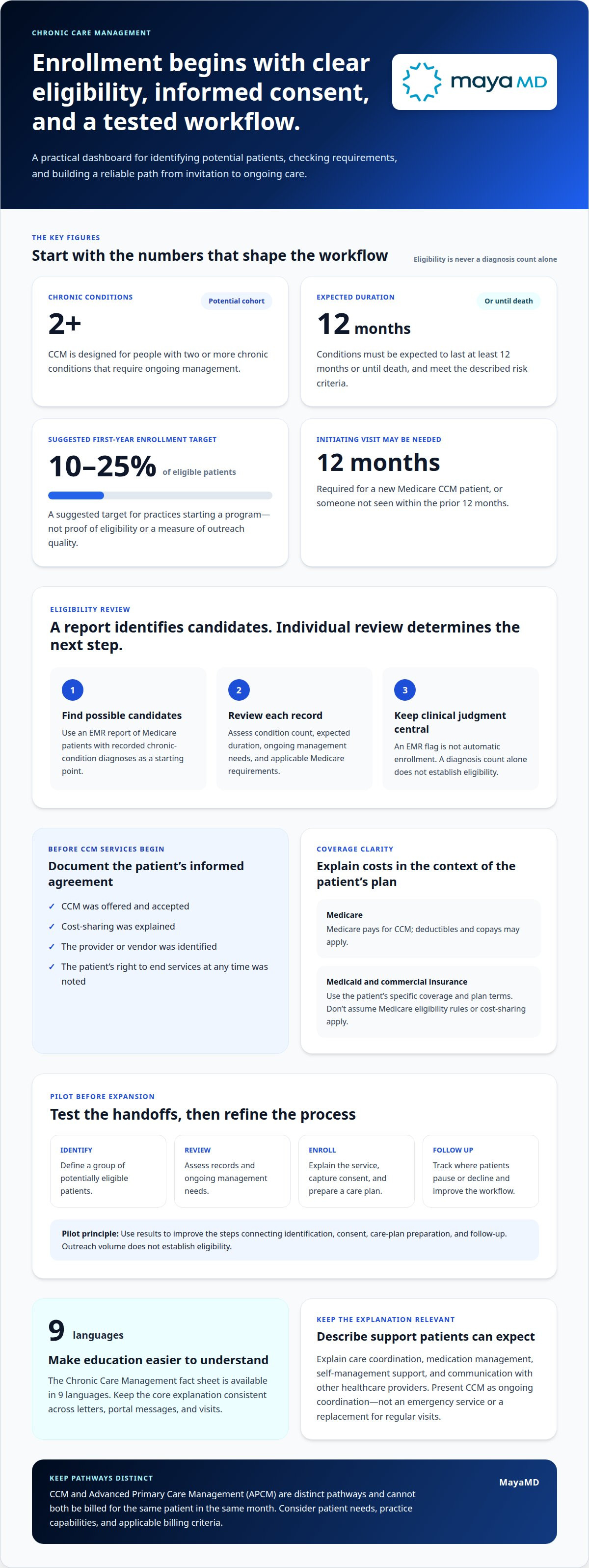
Chronic Care Management (CCM) coordinates ongoing support for people managing multiple chronic conditions. According to the Centers for Medicare & Medicaid Services, it is designed for people with two or more chronic conditions requiring ongoing management. Eligible conditions must be expected to last at least 12 months or until death, and they must place the patient at risk of acute exacerbation, decompensation, or functional decline under the described criteria.
CCM eligibility is not established by a diagnosis count alone. A practice needs to assess the patient’s chronic conditions, ongoing management needs, and relevant Medicare requirements. Patients must explicitly agree to enroll. Records should document that CCM was offered and accepted, explain cost-sharing, identify the provider or vendor, and note the patient’s right to end services at any time. A new Medicare CCM patient, or someone not seen within the prior 12 months, needs an initiating visit.
Electronic medical record (EMR) reports can help teams identify a potential patient cohort systematically. Start with a report of Medicare patients with recorded chronic-condition diagnoses, then review each record for the number and expected duration of conditions. Treat the report as a starting point, not a substitute for individual review. For example, a patient with several diagnoses may need clinical review to determine whether ongoing management is appropriate and whether the documentation supports enrollment.
A pilot helps test the workflow before a management program expands. Use a defined group of potentially eligible patients to assess record review, outreach, consent capture, care-plan preparation, and follow-up. A first-year enrollment target of 10-25% of eligible patients is suggested for practices starting a program. Track where patients pause or decline, then refine the explanation or process without treating outreach volume as proof of eligibility.
• Separate candidate identification from eligibility review, so an EMR flag never becomes automatic enrollment.
• Record the patient’s agreement and required disclosures before beginning CCM services.
• Use pilot results to improve the steps that connect identification, consent, and a documented care plan.
CCM and Advanced Primary Care Management (APCM) are distinct care-management pathways, and they cannot both be billed for the same patient in the same month. Practices evaluating how care-management models fit their capabilities can review Advanced Primary Care Management alongside their CCM workflow. The decision should account for patient needs, practice capabilities, and the applicable billing criteria.
CCM awareness campaigns and patient education
A useful CCM campaign explains the service before asking patients to consider it. Briefly describe chronic care management, who it may help, and how it fits with ongoing care. For Medicare, explain that Medicare pays for CCM, while deductibles and copays may apply. Don’t describe the service as cost-free or suggest that every eligible patient will have the same out-of-pocket costs.
Insurance context matters. Explain Medicare CCM enrollment in terms of the Medicare benefit and its cost-sharing. For Medicaid and commercial insurance, base the conversation on the patient’s specific coverage and plan terms. Don’t assume Medicare eligibility rules or cost-sharing apply to those programs. This distinction helps patients understand which coverage information is relevant to them.
Educational materials give staff a consistent foundation for conversations. The Chronic Care Management fact sheet is available in 9 languages, supporting communication with patients who prefer different languages. A campaign can pair that resource with brief, plain-language materials describing care coordination, medication management, self-management support, and communication with other healthcare providers. Use the same core explanation across letters, portal messages, and visits.
Education is more relevant when it connects a patient’s chronic conditions with everyday decisions. For someone managing hypertension, explain how medication questions, blood pressure goals, and follow-up visits fit into a care plan. For a patient managing diabetes, medication education can clarify the prescribed routine and help identify questions for the care team. These examples inform patients without replacing individualized clinical advice.
• Introduce CCM as ongoing coordination, not an emergency service or a replacement for regular visits.
• Explain how medication management and self-management support can relate to the patient’s conditions.
• Describe coordination with other healthcare providers as part of connected care.
• Use accessible formats and language preferences to make information easier to understand.
Patient education supports enrollment when it gives eligible patients enough context to make an informed decision. Invite questions about the service, coverage, and expected communication, then answer clearly using consistent materials. When patients understand how CCM fits with their care plan, they can consider participation based on relevant needs rather than a vague campaign message.
For teams developing patient-facing explanations and outreach materials, a conversation about patient engagement workflows can help connect education with a consistent enrollment process.
Patient enrollment, engagement, and retention
A CCM program needs more than a completed enrollment form. It requires reliable handoffs from invitation to ongoing care, with each patient’s decision and next step visible to the team.
Enrollment and Retention
Effective patient enrollment strategies for chronic care management connect a clear invitation with a practical next step. Track outreach attempts, patient responses, consent status, and care-plan readiness separately. Enrollment activity is estimated to take 4-8 weeks, so a stage-based view can reveal whether delays occur during contact, decision-making, or preparation. A first-year target of 10-25% of eligible patients is suggested for practices starting a program.
Retention depends on whether the service remains relevant after enrollment. Use follow-up visits and calls to discuss progress, answer questions, and identify needs that could affect participation. If a patient chooses to end services, record the date and reason if provided. This helps distinguish patient preference from process issues, such as unclear communication or missed follow-up.
Ongoing Engagement and Adherence
Make each engagement purposeful. A care manager might clarify a patient’s next appointment, help schedule a screening, or follow up on a question from an earlier conversation. Record the action and its status so the next contact moves care forward instead of starting over.
Adherence conversations should focus on barriers patients identify, not assumptions about their behavior. A patient, for example, may need a medication instruction explained or help coordinating with another provider. Route clinical questions to the appropriate care team, then document the response and agreed next step. This supports continuity while keeping clinical decisions with qualified professionals.
Measuring Enrollment and Program Outcomes
Evaluate patient enrollment strategies for chronic care management by tracking conversion between outreach stages, continued participation, and documented reasons for withdrawal. Compare these measures across patient cohorts or communication channels to find workflow friction. Keep enrollment metrics separate from clinical outcomes: a completed contact or care plan alone doesn’t demonstrate a change in health status.
For program reviews, connect operational measures with care activities, such as completed screenings, scheduled appointments, and resolved coordination tasks. Use patient feedback and documented questions to identify communication gaps. Review patterns with the care team and adjust follow-up when patients repeatedly face the same obstacle. Consistent definitions make measures more useful to compare over time.
Explaining CCM benefits and services
Practical examples can help patients make an informed enrollment decision. Explain what CCM supports, how it connects with existing treatment, and what participation involves.
Benefits of CCM Participation
CCM can bring ongoing care coordination into a patient’s routine between appointments. A comprehensive assessment considers health and medical history, then informs a customized care plan based on the patient’s needs. For someone managing diabetes, the plan can organize follow-up questions and coordination with other providers. The clinical team can communicate with patients in person, by phone, or electronically.
Regular contact gives patients an opportunity to discuss progress and care needs. Monthly calls can surface treatment questions or barriers to following a care plan. Depending on health needs, CCM teams may meet with patients weekly or monthly, and meetings may be more frequent. Communication may also involve family caregivers and other support systems, guided by the patient’s needs.
Benefits of Enrollment
Enrollment gives patients a defined way to receive ongoing management alongside their usual care. A care plan can connect the patient, primary care provider, pharmacy, and other providers around relevant goals. For someone managing diabetes and another chronic condition, coordinated communication can keep treatment questions and follow-up needs visible across the care team.
Patients should understand the service before giving consent. Explain the support included, how communication may take place, and how cost-sharing relates to their coverage. Medicare Part B patients typically pay coinsurance for CCM, and deductibles and copays may also apply. Since coverage affects a patient’s financial responsibility, distinguish the service itself from the terms of the patient’s individual plan.
Describe the work, not just the label. “Care coordination” may involve communicating with another provider, connecting a patient with community resources, or including a caregiver in appropriate support. “Self-management support” may include discussing exercise or nutrition changes in relation to a patient’s health goals. These examples show how CCM can fit treatment needs without promising a particular clinical result.
Tailor the explanation to the patient. One person may value structured follow-up after a visit; another may need a clearer connection between several providers. Invite questions and use the patient’s care priorities to explain relevant services. Clear, specific explanations support meaningful consent and help patients decide whether CCM fits their ongoing care needs.
Consistent, personalized enrollment outreach
Effective outreach adapts both the message and communication method to each patient’s needs. For underserved or hard-to-reach patients, use their preferred language, accessible formats, and alternatives to phone calls, such as written or electronic communication.
Technology can organize outreach status, consent steps, and follow-up notes. Phone, in-person, and electronic communication offer different ways to reach patients. Remote monitoring can add ongoing health data to care coordination when it fits the patient’s care.
Outreach for Underserved Patients
Start by identifying practical barriers in each patient’s enrollment path. Someone with limited internet access may prefer a phone conversation; another patient may need translated materials or a caregiver involved in communication. Record the preferred method and stated access needs, then use them to shape future contact instead of repeating the same message.
Keep each invitation specific. Explain why the primary care team is reaching out, what the next step involves, and how the patient can ask questions. If a message isn’t answered, use another appropriate channel and document the outcome. For Medicare patients not seen within the prior 12 months, coordinate outreach with the initiating-visit workflow.
Technology and Follow-Up Methods
A shared outreach record helps staff see whether a patient was contacted, responded, agreed, or needs another conversation. Note the communication channel, the patient’s questions, and the next action. This gives each team member useful context for follow-up and helps prevent disconnected messages from different programs.
Digital tools can support communication between visits, while remote patient monitoring can capture health data such as vital signs in real time. Use monitoring information within an appropriate care process, with a clear route for clinical review. Technology should help teams provide coordinated, ongoing support, not suggest that automated contact replaces clinical care.
Consistency starts with a defined sequence. First, tailor the invitation to the patient’s condition and care priorities. Then explain the proposed support and invite questions. Record the patient’s decision and any needed follow-up. If the patient doesn’t enroll, note whether they requested more information or preferred contact later. This helps staff avoid mistaking silence for consent.
Personalization matters after enrollment, too. A patient managing several conditions may need communication coordinated with primary care and specialists; another may prefer brief updates focused on one care-plan goal. Match each contact to the patient’s stated needs and record the agreed next step. This keeps outreach useful rather than repetitive.
Review outreach records for missed transitions, such as an invitation without a documented decision or a patient question without follow-up. Teams can use those patterns to refine scripts, communication channels, and handoffs. To discuss how personalized patient outreach workflows can support consistent enrollment communication, connect with the team.
MayaMD: AI patient engagement solutions
MayaMD supports care teams looking to strengthen communication with patients managing chronic conditions. Its cloud-based, HIPAA-compliant clinical AI platform combines deterministic logic with generative AI to support patient engagement. AI patient engagement solutions can complement enrollment workflows by helping deliver consistent information and maintain communication throughout ongoing care.
The Clinical AI Agent supports organizations seeking digital patient interactions, while remote patient monitoring can support chronic care management workflows that use patient health data. These tools complement clinical oversight; they don’t replace patient consent, individualized care planning, or the care team’s role.
To discuss how MayaMD’s solutions may fit your patient engagement needs, contact MayaMD.
Build the Next Stage of Patient Engagement
The next step is to turn enrollment goals into a communication workflow your care team can sustain. Effective patient enrollment strategies for chronic care management account for how patients receive information, where questions go, and how follow-up connects with ongoing care. Mapping these decisions can help your organization identify where digital engagement fits alongside clinical oversight.
MayaMD offers a Clinical AI Agent, AI patient engagement solutions, and automated post-discharge communication solutions. These offerings can support organizations working to connect patient communication across enrollment and care transitions. Their role should align with your workflows, patient needs, and the clinical responsibilities of your team.
Use your current enrollment process as the starting point for a focused discussion about communication needs and potential technology support. Contact MayaMD about CCM enrollment to explore the next step for your organization. Clear planning can help your team build a more connected experience for patients managing chronic conditions.
Frequently Asked Questions
How to Enroll Patients in CCM?
Enroll a patient by confirming suitability, explaining the service, obtaining explicit agreement, and establishing the required care process. A practical workflow begins with reviewing the patient’s record, then discussing how CCM fits their ongoing care and answering questions before recording their decision. If they agree, prepare the care plan and arrange follow-up. A new Medicare CCM patient, or one not seen within the prior 12 months, needs an initiating visit.
Who Is Eligible for CCM?
Medicare CCM is designed for beneficiaries with two or more qualifying chronic conditions requiring ongoing management. The conditions must be expected to last at least 12 months or until death. Eligibility review should consider the documented conditions and their management needs, rather than relying only on an automated diagnosis list. According to the Centers for Medicare & Medicaid Services, CCM is intended for people with two or more chronic conditions requiring ongoing management.
What are Medicare CCM consent and enrollment requirements?
Patients must explicitly agree to enroll before receiving CCM services. Enrollment records should show that the service was offered and accepted, explain applicable cost-sharing, identify the provider or vendor, and note the patient’s right to end participation at any time. To confirm understanding, explain what communication to expect, pause for questions, and accurately record the patient’s decision before proceeding with enrollment.
How do healthcare practices identify and recruit eligible CCM patients?
Practices can use EMR reports to create a candidate list based on Medicare status and recorded chronic-condition diagnoses, then review each record individually. Route candidates for clinical eligibility review before outreach. Track whether each person was contacted, responded, requested more information, or declined. These distinctions help staff plan follow-up and prevent an unreviewed report or unanswered message from being treated as proof of eligibility or consent.
What patient education messages improve CCM enrollment and participation?
Education is more useful when it explains a purpose that matters to the patient, such as coordinating care questions between visits or connecting appointments with an existing care plan. Use concrete examples, and distinguish CCM from emergency services and routine appointments. For instance, explain how a patient can raise a medication question with the care team. Clear, neutral language lets patients weigh the service without implying guaranteed health outcomes.
What workflows and staffing are needed to enroll patients in chronic care management?
A workable enrollment process assigns responsibility for candidate review, patient outreach, consent documentation, care-plan preparation, and follow-up. Non-complex CCM requires at least 20 minutes of clinical staff time per patient each month. Practices should plan capacity for that monthly work alongside enrollment tasks, including time to document care delivered and coordinate next steps. A shared workflow helps staff see outstanding actions and avoid gaps during handoffs.
What are common barriers, risks, and compliance pitfalls in CCM patient enrollment?
Common process risks include enrolling without explicit agreement, incomplete records, unclear cost-sharing explanations, and confusing a potential candidate with a confirmed enrollee. Billing coordination matters, too: only one provider may bill CCM for a patient in any calendar month, and CCM and APCM cannot both be billed for the same patient in the same month. Documented review before billing can help identify these issues and address workflow gaps.




See The MayaMD Difference
Fill the form below
Download Our Apps
MayaMD for patients and MayaPro for physicians - available on iOS and Android.
FOR PATIENTS
MayaMD App
AI-powered symptom assessment, triage, and secure access to your care team.


FOR PHYSICIANS
MayaPro App
MayaPro brings patient vitals, RPM/PCM care plans, and clinical decision support to your pocket.